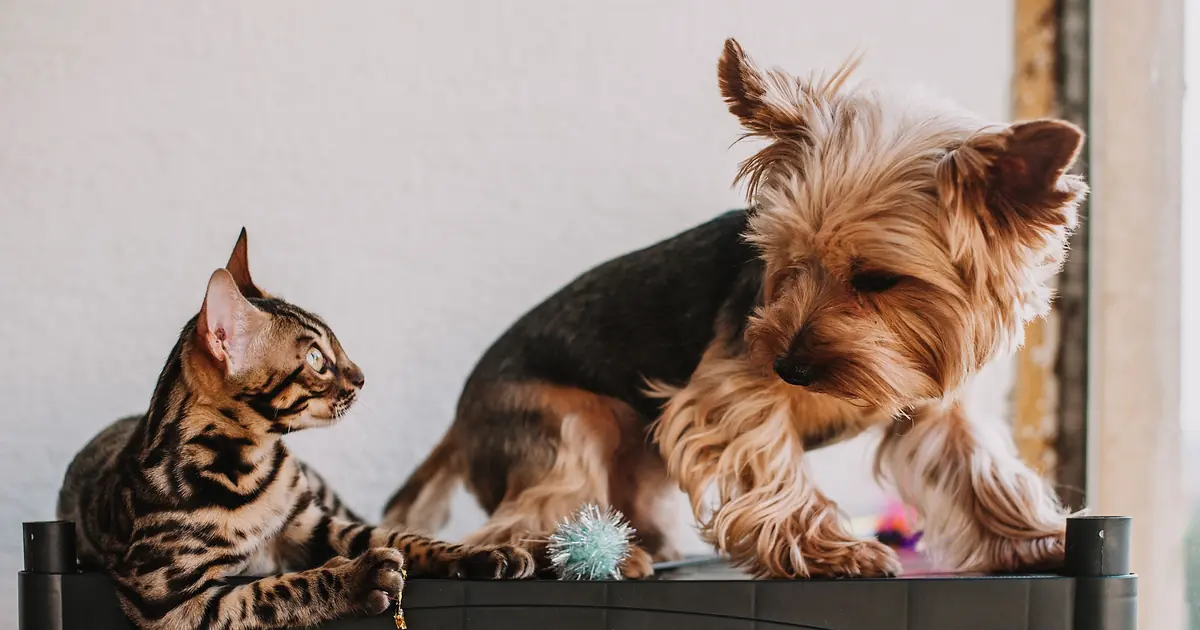
Ask any cat person and any dog person the same question and you’ll get two very different answers, delivered with the same amount of confidence. Cat people will tell you their cat has never needed a bath in nine years. Dog people will tell you their dog just rolled in something dead and they wouldn’t trade him for the world.
So who’s right? Turns out there’s an actual answer here, and it’s more interesting than either side expects. Cats really do win on self-grooming and bathroom habits. Dogs aren’t dirty animals, they just need more help from you to stay that way. Let’s get into the specifics, because the details matter more than the headline.
- Cats spend roughly 30 to 50 percent of their waking hours grooming themselves, according to Cornell Feline Health Center, while dogs have no real equivalent self-cleaning routine.
- Cats instinctively bury their waste and use a litter box, while dogs need walks and a human with a bag to manage bathroom habits.
- Neither a cat’s mouth nor a dog’s mouth is truly “clean.” Both carry hundreds of species of bacteria that simply differ from human mouth bacteria, not fewer in number.
- Cats are actually the more common allergy trigger of the two: their Fel d 1 protein causes roughly two-thirds of pet-related allergies, more than dog allergens.
- For household mess and odor, a healthy indoor cat with a clean litter box usually beats an outdoor dog that gets muddy, but a well-groomed dog can absolutely be cleaner than a neglected cat.
Are cats cleaner than dogs?
Yes, cats are cleaner than dogs in the ways that matter most day to day: self-grooming, bathroom habits, and how often they need your help to stay tidy. Cats evolved as solitary hunters who needed to stay scent-free to avoid tipping off prey and predators alike, so they built an entire grooming ritual around it. Dogs evolved as pack animals who didn’t need to hide their scent from anyone, so grooming just isn’t wired into them the same way.
That doesn’t make dogs “dirty” pets. It just means the job of keeping them clean falls on you instead of on them. A cat handles most of its own upkeep. A dog needs a partner.
How do cats keep themselves so clean?
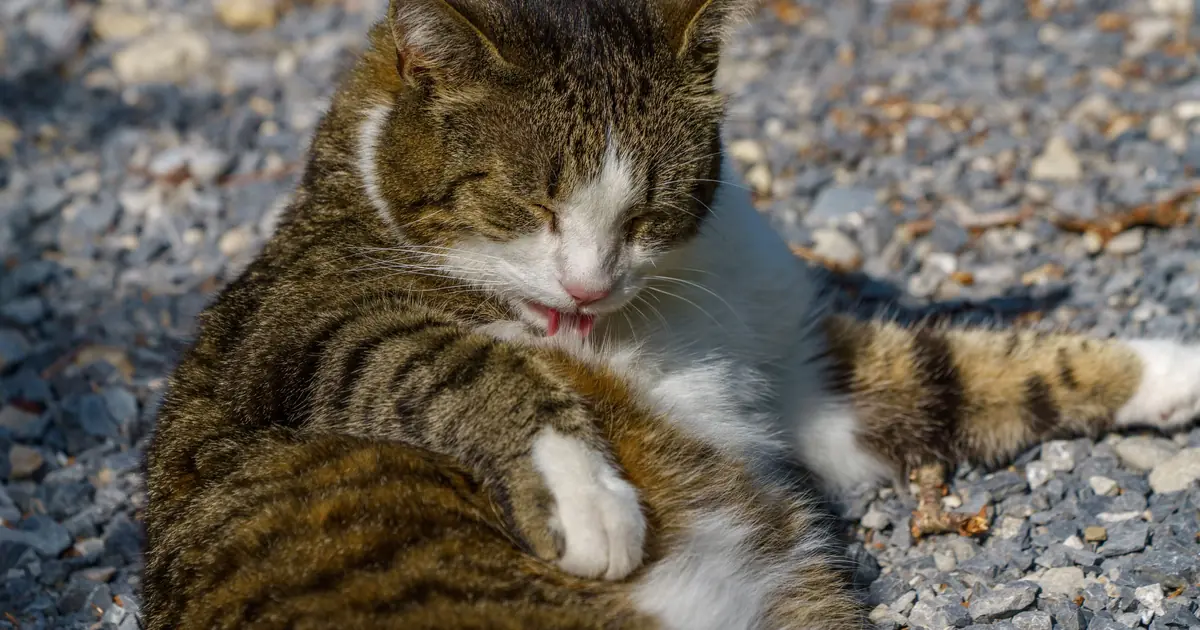
Cats keep themselves clean mainly through near-constant self-grooming with a tongue built specifically for the job. According to Cornell Feline Health Center, cats spend somewhere between 30 and 50 percent of their waking hours grooming, which adds up to a couple of hours a day for most cats.
A few things make this possible:
- Barbed tongue. A cat’s tongue is covered in tiny, backward-facing hooks called papillae. They work like a built-in comb, pulling out loose fur, dirt, and debris every time your cat licks.
- Flexible spine. Cats can twist and reach almost every part of their body, which is why you’ll catch yours grooming spots you didn’t know were reachable.
- Instinctive waste burying. Cats naturally dig and cover their waste in a litter box, a behavior rooted in avoiding predators in the wild. It also happens to keep the mess contained and the odor down, as long as you’re scooping regularly.
- Low water needs for bathing. Most healthy cats never need a bath from you. Their grooming routine handles it, unless they get into something sticky, greasy, or toxic.
This grooming habit is also why your cat smells like, well, not much at all most of the time. If you’ve ever wondered why cats smell so good even without bathing, the constant self-cleaning is the main reason.
How do dogs compare on staying clean?
Dogs fall behind cats mainly because they don’t self-groom the way cats do, so cleanliness depends almost entirely on you. Dogs will lick a paw here and there, but it’s nothing close to a cat’s dedicated grooming sessions. No barbed tongue, no all-over reach, no instinct to bury waste.
Dogs also just live differently. They go outside multiple times a day, walk through mud, roll in grass, sniff things you’d rather not think about, and track all of it back inside on their paws and coat. A dog that gets regular walks is a dog that’s regularly picking up dirt, pollen, and outdoor odor.
None of this means dogs are gross. It means their cleanliness is a team effort. Regular brushing, scheduled baths (most vets suggest every 4 to 6 weeks for the average dog, more often for oily or long-coated breeds), nail trims, and ear cleaning all fall on the owner. Skip those and a dog gets dirty fast. Keep up with them and a dog can be every bit as fresh as a cat.
What are the exceptions and nuances in the cats vs dogs cleanliness debate?
Cats have their own cleanliness downsides, even with all that grooming. Cats still shed, sometimes heavily during spring and fall coat changes. They get hairballs from swallowing loose fur during grooming, which can end up on your carpet at the worst possible moment. And litter tracking is real: even the best litter box setup sends a few granules skittering across your floor on tiny cat paws.
Cats also groom compulsively when stressed, which can actually cause bald patches or skin irritation. If you’ve noticed excess licking, flaky skin or dandruff can show up even on a cat that grooms constantly, since over-grooming and skin issues aren’t the same as dirtiness.
On the dog side, an indoor-only, well-brushed small dog can be tidier day to day than an outdoor cat that hunts and roams. Location and lifestyle matter as much as species. A strictly indoor cat versus a dog that spends hours in a backyard every day isn’t really a fair fight, the cat wins on mess almost automatically.
The honest version: species gives cats a grooming advantage, but individual routine, environment, and how much effort the owner puts in can shrink or erase that gap in either direction.
Which pet is cleaner for your home and your allergies?
For everyday household mess, cats usually win, especially indoor cats with a well-maintained litter box. Less mud, less tracked-in debris, less bathing-related water everywhere. But for allergies specifically, dogs actually have the edge, and this is the part most cats-vs-dogs articles skip entirely.
Cats produce a protein called Fel d 1 in their saliva and skin glands. It’s small, lightweight, and stays airborne far longer than typical dog allergens, and it’s notoriously sticky, showing up in homes, schools, and offices that have never had a cat in them. Because cats groom so much, they spread Fel d 1 across their fur constantly, which is exactly the habit that makes them “cleaner.” Research on airborne pet allergens shows cat allergen levels running higher than dog allergen levels in homes, and cats are responsible for roughly two-thirds of pet-related allergy cases overall.
So the pet that’s cleaner for your floors isn’t automatically the pet that’s cleaner for your sinuses. If allergies are a concern in your house, that’s a genuinely different question than which pet grooms itself better.
| Category | Cats | Dogs |
|---|---|---|
| Self-grooming | 30 to 50% of waking hours, daily | Minimal, no real self-grooming routine |
| Bathing needs | Rarely, usually never required | Every 4 to 6 weeks on average, owner-dependent |
| Waste habits | Buries waste in litter box instinctively | Needs walks and owner pickup outdoors |
| Body odor | Minimal in healthy cats | More noticeable, especially between baths |
| Shedding | Moderate to heavy, seasonal | Varies widely by breed, some heavy shedders |
| Home mess | Low if litter box is maintained, some tracking | Higher, especially with outdoor access and mud |
| Allergen load | Higher, Fel d 1 causes about two-thirds of pet allergies | Lower, though still allergenic for sensitive people |
Is a cat’s mouth actually cleaner than a dog’s mouth?
No, neither a cat’s mouth nor a dog’s mouth is genuinely “clean” by human standards, and this popular claim doesn’t hold up under scrutiny. It’s a myth that gets repeated so often it sounds like fact, but researchers who’ve actually studied pet mouths found something different: dogs and cats both carry hundreds of species of oral bacteria, just different species than what lives in a human mouth.
According to VCA Hospitals, dogs carry around 400 kinds of oral bacteria and cats around 200, and only a small fraction overlap with human mouth bacteria. That’s actually part of why pet bites can get infected fast: your immune system isn’t already primed to recognize those specific bacteria the way it is with another person’s mouth. A cat’s bite in particular is known for pushing bacteria deep under the skin, since their teeth are thin and sharp, which is why cat bites have a reputation for turning into nasty infections quickly.
So skip the idea that a cat or dog kiss is somehow more sanitary than it looks. It’s not dirtier than a human mouth exactly, it’s just different, and “different” isn’t the same as “cleaner.” If you’re ever curious why your cat’s breath smells off in particular, that’s usually a dental or diet issue worth a vet visit, not just normal mouth bacteria. Our guide on why a cat’s breath might stink breaks down when it’s normal and when it’s not.
Can living with both a cat and a dog affect how clean your home is?
Yes, having both pets tends to average out, with the cat’s grooming habits offsetting some of the mess a dog brings in, but it also means double the shedding, double the dander, and a bit more coordination on your end. Households with both pets usually do fine on cleanliness as long as litter boxes get scooped daily and the dog gets brushed and bathed on schedule.
One thing worth knowing if you have both: illnesses can occasionally pass between cats and dogs, even though they’re different species. If you’re curious about that overlap, whether cats and dogs can get each other sick covers what actually transfers between them and what doesn’t. It’s a separate question from cleanliness, but it’s one multi-pet households ask a lot.
Frequently Asked Questions
Q: Are cats really cleaner than dogs, or is that just a stereotype?
It’s backed by real behavior, not just stereotype. Cats spend 30 to 50 percent of their waking hours grooming themselves, according to Cornell Feline Health Center, while dogs have no comparable self-grooming routine and depend on regular owner baths to stay clean.
Q: Do dogs smell worse than cats?
Generally yes, especially between baths. Dogs have oil-producing skin glands and spend more time outdoors picking up dirt and odor, while a healthy cat’s constant self-grooming keeps its coat close to odor-free most of the time.
Q: Is it true a dog’s mouth is cleaner than a human’s?
No. Dogs carry roughly 400 species of oral bacteria and only a small share overlap with human mouth bacteria, according to VCA Hospitals. A dog’s mouth isn’t cleaner, it’s just carrying different bacteria than yours.
Q: Which pet triggers more allergies, cats or dogs?
Cats do. Their Fel d 1 allergen is small, airborne, and sticky, and cats are responsible for roughly two-thirds of pet-related allergy cases, more than dog allergens like Can f 1. The pet that’s tidier around the house isn’t automatically easier on allergies.
Q: Do cats need baths at all?
Most healthy cats never need a bath, since their grooming routine handles it. Exceptions include senior or overweight cats who can’t reach every spot, cats with skin conditions, or any cat that gets into something sticky, oily, or toxic.
Q: Why do cats bury their poop and dogs don’t?
Cats bury waste instinctively, a behavior traced back to wild cats hiding their scent from predators and more dominant cats. Dogs never developed that instinct, since they evolved as pack animals with less need to mask their presence.
Q: Are indoor cats cleaner than outdoor dogs?
Usually, yes, by a wide margin. An indoor cat avoids mud, outdoor debris, and most parasites, while an outdoor dog picks up dirt, pollen, and grime every time it goes out. The comparison narrows a lot if you compare an indoor cat to an indoor, well-groomed dog instead.
Q: Do cats shed less than dogs?
Not necessarily. Shedding depends far more on breed and coat type than on species. Some cats, like Maine Coons, shed heavily, while some dog breeds, like Poodles, shed very little, so this one isn’t a clean win for either side.

Hello and welcome to The Ideal Cat!
We are some passionate cat owners from different professions. We love our cats and have a lot of experience in how to care for our pets. We are incredibly excited to share our knowledge, experience, and research with you. So you can take good care of your loving cat. We will answer most of the common questions about owning cats, taking care of them, etc. If you have any question contact with us. Thanks for visiting! Enjoy the content.
