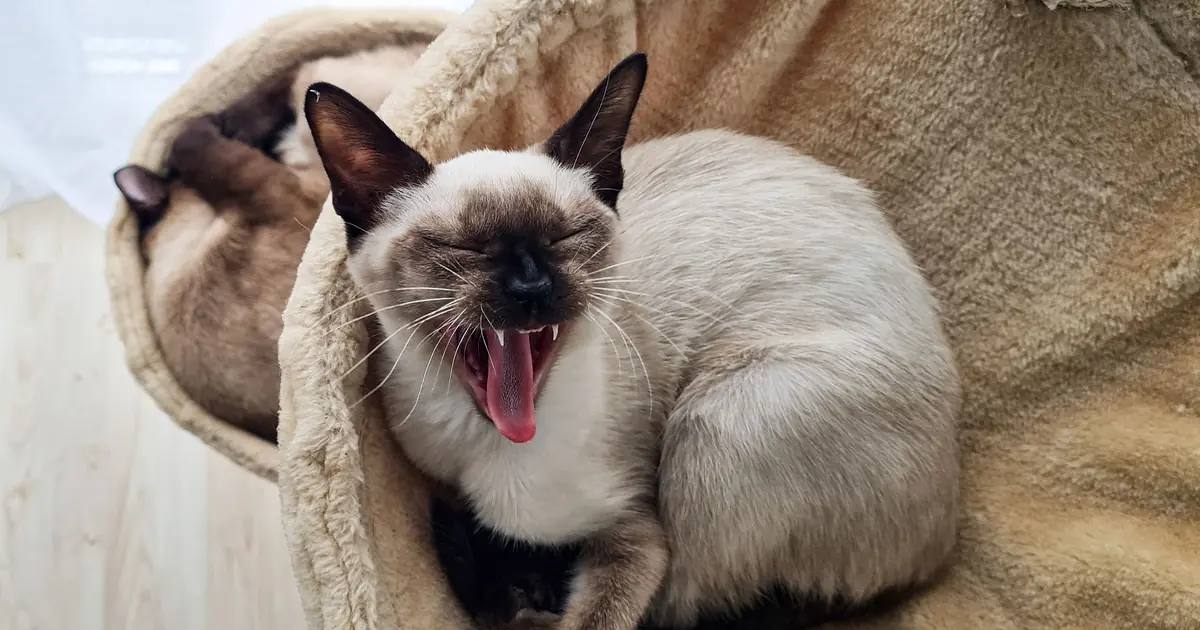
Picture it. It’s 5am, and your cat is hunched on the rug making that horrible hack, hack, ack sound. Your heart drops. Is your cat choking? Should you be doing something right now? Take a breath, because so can your cat, in most cases.
So, can cats choke on hairballs? The honest answer is yes, it’s possible, but genuine choking is uncommon. That dramatic retching almost always ends with a wet cigar-shaped clump of hair on your floor and a cat who trots off like nothing happened. The real dangers are the two rare-but-serious ones: a hairball stuck in the airway, or a hairball that moves into the gut and causes a blockage. Let’s sort out which is which, so you know when to relax and when to move fast.
- Most hairballs are messy but not a choking emergency; the loud retching is your cat’s body working normally to bring one up.
- True choking is rare and shows as open-mouth breathing, blue or pale gums, frantic pawing at the mouth, or collapse, and needs an emergency vet immediately.
- A hairball can move into the intestines and cause a blockage, signaled by repeated unproductive retching, ongoing vomiting, not eating, constipation, and lethargy.
- Frequent hairballs are not “just a cat thing” and can point to over-grooming, allergies, or gut disease worth a vet visit.
- Regular brushing, a hairball-control diet, and good hydration are the safest ways to reduce hairballs.
Can a cat actually choke to death on a hairball?
A cat choking to death on a hairball is very rare, but not impossible. In most cases the hairball travels up the esophagus and out the mouth without ever touching the airway, which is why your cat can still breathe (and glare at you) through all that noise. The windpipe and the food pipe are separate paths, and hairballs normally take the food-pipe route.
The scary exception is when a large hairball gets stuck at the back of the throat and blocks the airway itself. That’s true choking, and it looks very different from a normal hairball episode. According to the Cornell Feline Health Center, hairballs are usually expelled without harm, but persistent retching that produces nothing deserves a vet’s attention. If your cat is bringing up hairballs and then acting totally normal, that’s the reassuring version.
How do I tell a normal hairball from real choking?

The difference between a normal hairball and real choking comes down to breathing. A cat coughing up a hairball is loud but can still move air; a truly choking cat cannot breathe and panics fast. The episode length is a big clue too: a hairball is over in seconds to a minute, while choking escalates and doesn’t resolve.
During a normal hairball, your cat crouches, extends the neck, and makes rhythmic ack-ack retching, then produces the hairball and recovers instantly. During true choking, there’s no hairball, the gums may turn blue or pale, and your cat may paw at the mouth, drool, or collapse. If you’ve ever wondered whether your cat is gagging up clear liquid versus choking, the same rule applies: if breathing looks normal after, it’s almost never a choking emergency.
| Normal hairball (not an emergency) | Choking or blockage (emergency) |
|---|---|
| Loud retching, then a hairball appears | Retching that produces nothing, again and again |
| Over in seconds to about a minute | Distress that keeps escalating and won’t stop |
| Breathing looks normal throughout | Open-mouth breathing, gasping, or no air moving |
| Gums stay pink | Gums or tongue turn blue, gray, or pale |
| Cat recovers and acts fine right after | Pawing at mouth, drooling, collapse, or hiding in pain |
| Still eating and drinking normally | Refusing food, vomiting, constipation, lethargy |
When is a hairball an emergency?
A hairball becomes an emergency in two situations: a true airway obstruction, or an intestinal blockage. Both are uncommon, but both can be life-threatening, so it helps to know the red flags cold. When in doubt, call your vet or an emergency clinic; it’s always better to check.
Get your cat to a vet right away if you see any of these:
- Open-mouth breathing, gasping, wheezing, or clearly struggling for air
- Gums, lips, or tongue turning blue, gray, or very pale
- Frantic pawing at the mouth, heavy drooling, or a panicked, distressed cat
- Collapse, weakness, or unresponsiveness
- Repeated unproductive retching or gagging with no hairball or food coming up
- Ongoing vomiting, refusing to eat for more than a day, or a swollen, painful belly
- Constipation, no stool, straining in the litter box, plus lethargy
That last cluster points to a possible blockage. A hairball that doesn’t pass can get stuck in the stomach or intestines, and a gastrointestinal obstruction is a surgical emergency. Cornell notes that ongoing vomiting, appetite loss, lethargy, and either diarrhea or constipation can all signal a hairball that has caused trouble downstream. Don’t wait it out. If you want a broader rundown of danger signs, our guide on when to worry about cat vomiting walks through them.
Why does my cat keep getting hairballs?
Cats get hairballs because grooming is a constant part of their day, and the tiny backward hooks on a cat’s tongue catch loose hair that then gets swallowed. Most of that hair passes through the gut and out in the stool. What doesn’t pass can clump in the stomach and come back up as a hairball. A stray hairball here and there is normal cat life.
Frequent hairballs, though, are worth a second look, because they’re often a symptom rather than a quirk. If your cat is producing hairballs weekly, or several a month, something may be driving extra grooming or slowing the gut. Common culprits include:
- Over-grooming: stress, anxiety, boredom, pain, allergies, or skin issues can make a cat lick far more than usual, swallowing more hair.
- Long or heavy coats: breeds like Maine Coons, Persians, and Ragdolls simply shed more hair into the mix.
- Underlying gut disease: inflammatory bowel disease or food sensitivities can slow digestion, so hair lingers instead of passing.
- Skin parasites or a flea itch: anything itchy ramps up licking.
The experts at VCA point out that recurring hairballs can be tied to conditions affecting the skin or the digestive tract, so a pattern is worth mentioning to your vet. Cats hairballs aren’t always harmless, and frequency is the clue.
How can I reduce my cat’s hairballs?
The best way to reduce hairballs is to cut down on how much loose hair your cat swallows and to help what is swallowed move through smoothly. You can’t stop grooming, and you wouldn’t want to, but you can shift the odds a lot with a few simple habits.
- Brush regularly. Hair you catch on a brush is hair your cat never swallows. Long-haired cats benefit from daily brushing; short-haired cats a few times a week. A good cat brush makes this quick and even enjoyable for most cats.
- Feed a hairball-control or sensitive-stomach diet. These foods use added fiber to help hair pass through the gut. If your cat has a touchy tummy, a sensitive-stomach cat food can pull double duty.
- Keep water flowing. Good hydration keeps things moving through the digestive tract. Many cats drink more from a fountain than a bowl.
- Ask your vet about hairball remedies. Vet-approved gels and lubricants exist, but check with your vet on whether and how to use one rather than guessing.
- Tackle over-grooming at the source. If stress or itch is the trigger, more play, enrichment, and a vet check for skin issues do more than any hairball product.
For a deeper walkthrough, our full guide on helping a cat with a hairball covers day-to-day management step by step.
What should I do if my cat seems to be choking?
If your cat truly seems to be choking, stay calm and get to a vet or emergency clinic as fast as possible, because a blocked airway is a race against the clock. Do not reach blindly into your cat’s mouth. A panicked cat can bite hard, and a finger sweep can push an object deeper or injure the throat.
Here’s the careful order to follow:
- Look, don’t grab. If you can clearly see the object and reach it safely, you can try to remove it, but never do a blind finger sweep.
- Call your vet or the nearest emergency clinic immediately and head there. Tell them you’re coming.
- Skip the DIY Heimlich unless a vet is guiding you. Cat-specific first aid exists, but done wrong it can crack ribs or injure organs, so it’s a last resort under professional direction.
- Keep your cat as calm and still as you can on the way, since panic burns oxygen faster.
The safest place for a choking cat is a vet clinic with sedation, oxygen, and the right tools. When breathing is on the line, minutes matter more than home remedies.
This article is educational and isn’t a substitute for veterinary care. If your cat shows any breathing distress or blockage signs, contact a licensed veterinarian or emergency clinic right away.
Frequently asked questions about cats and hairballs
Q: Can cats choke to death on a hairball?
It’s very rare, but a large hairball can lodge in the airway and cause fatal choking. Far more often, a hairball comes up safely with loud retching and the cat is fine afterward. The bigger real-world danger is a hairball causing an intestinal blockage, which needs emergency treatment.
Q: How long should a hairball episode last?
A normal hairball episode is over in seconds to about a minute. Your cat retches a few times, brings up the hairball, and goes back to normal. Retching that drags on, repeats without producing anything, or comes with breathing trouble is not normal and needs a vet.
Q: How do I know if my cat has a hairball blockage?
Signs of a hairball blockage include repeated unproductive retching, ongoing vomiting, refusing to eat, constipation or no stool, a swollen or painful belly, and lethargy. A gastrointestinal blockage is a surgical emergency, so contact a vet immediately if you see this cluster of symptoms.
Q: Is it normal for cats to gag but not produce a hairball?
Occasional dry gagging can happen, but repeated retching with nothing coming up is a warning sign, not a normal hairball. It can signal an airway problem, a blockage, or another condition. If your cat gags repeatedly without producing a hairball, have a vet check it out.
Q: How often is too often for hairballs?
An occasional hairball is normal, but coughing one up weekly or several times a month is too often. Frequent hairballs can point to over-grooming, allergies, or digestive disease like inflammatory bowel disease. A pattern of frequent hairballs is worth a vet visit to find the cause.
Q: Can I give my cat butter or oil for hairballs?
It’s best not to rely on home fixes like butter or cooking oil, which can upset the stomach and don’t address the cause. Vet-approved hairball gels and diets are safer choices. Ask your veterinarian before giving any remedy so you use the right product in the right way.
Q: Which cat breeds get the most hairballs?
Long-haired and heavy-coated breeds like Persians, Maine Coons, and Ragdolls tend to get more hairballs because they shed more hair into the mix. Any cat can get them, and grooming-heavy or over-grooming cats of any breed are prone. Regular brushing helps these cats the most.
Q: Should I do the Heimlich maneuver on a choking cat?
Only as a last resort and ideally with a vet guiding you by phone. A cat Heimlich done wrong can crack ribs or injure organs. Never do a blind finger sweep either. The safest move for a choking cat is getting to an emergency vet as fast as you can.

Hello and welcome to The Ideal Cat!
We are some passionate cat owners from different professions. We love our cats and have a lot of experience in how to care for our pets. We are incredibly excited to share our knowledge, experience, and research with you. So you can take good care of your loving cat. We will answer most of the common questions about owning cats, taking care of them, etc. If you have any question contact with us. Thanks for visiting! Enjoy the content.
