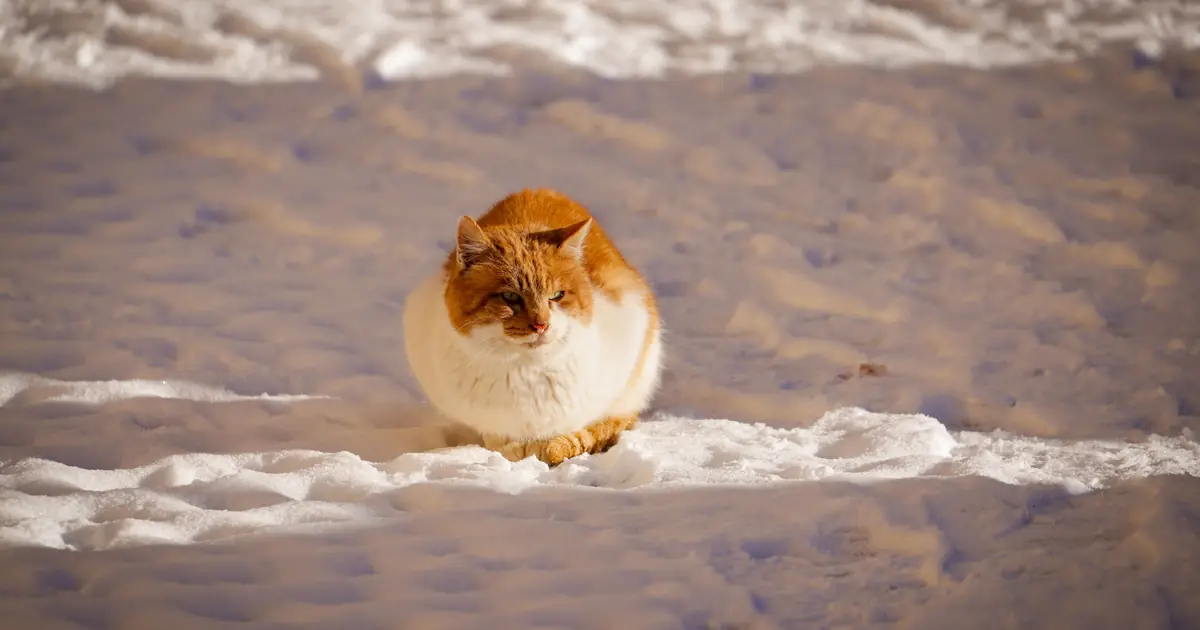
The first snowfall of the year turns a lot of living rooms into surprise theater. Your cat parks herself on the windowsill, tail flicking, eyes locked on the white stuff drifting past the glass. She’s transfixed. Maybe she even paws at the window, like she’s trying to catch a flake that’s three feet away and on the other side of the glass.
Then you open the door to let her check it out for real, and she takes one step onto the porch, shakes a paw like it just touched lava, and marches straight back inside. Sound familiar? That mix of fascination and instant regret is pretty much the whole story of cats and snow.
- Cats have a normal body temperature between 100.4°F and 102.5°F, and prolonged cold exposure can drop it into hypothermia territory fast.
- Frostbite in cats most often hits the ears, paws, and tail, the body parts with the least fur and blood flow to spare.
- Road salt and ice-melt products can irritate a cat’s paw pads and cause vomiting or diarrhea if licked off, according to the ASPCA.
- As little as one to two teaspoons of antifreeze (ethylene glycol) can be fatal to a cat, and it tastes sweet enough that cats will lap it up on their own.
- Most cats are safe with 5 to 10 minutes of supervised snow time before they need to come back in and warm up.
Do cats like snow?
It depends entirely on the cat. Some cats genuinely like snow, at least for a few minutes, because it moves, crunches, and smells different from anything else in the yard. Other cats want nothing to do with it and treat the first flake like a personal insult. Curiosity usually wins out for a moment, novelty is a powerful thing for a cat, but cold aversion tends to win the argument pretty quickly. Think of snow as a five-minute attraction, not a place your cat wants to hang out.
Why are some cats drawn to snow?
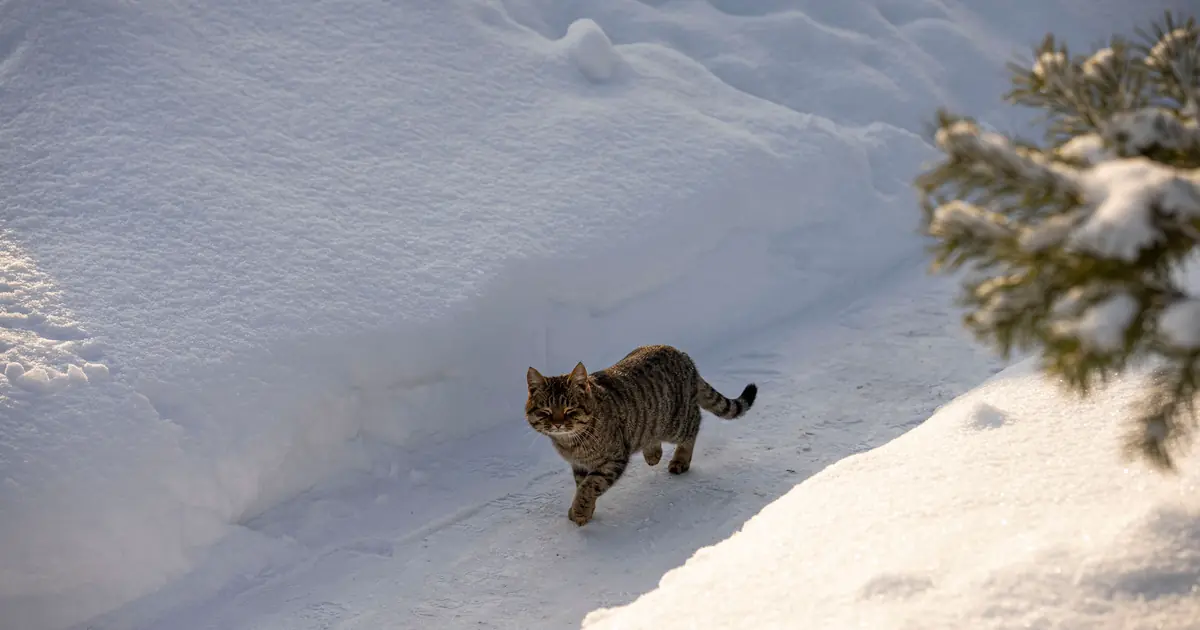
Cats get drawn to snow because it triggers their hunting instincts and their curiosity about anything new in their territory. Snow moves in the wind, it crunches under a paw, and it changes the whole texture of a yard your cat thought she already knew. That’s basically catnip for a brain that’s wired to chase and investigate. A cat pouncing at falling snowflakes is doing the same thing she’d do with a dangling toy or a moth on the ceiling. It’s novelty plus movement, and cats are suckers for both.
Why don’t most cats want to stay out in the snow?
Most cats avoid staying in snow because they feel the cold just like we do, and wet, cold fur makes it worse. A cat’s paw pads are covered in thin, sensitive skin, and packed snow or ice can feel sharp and uncomfortable fast. Once fur gets wet, it loses a lot of its insulating power, so a cat that seemed fine for the first minute can get chilled surprisingly quickly after that. This is exactly why so many cats do the classic “shake the paw, retreat to the porch” routine within seconds of stepping outside. If you’ve ever wondered whether cats get cold the way people do, the short version is yes, and their paws usually feel it first.
Is snow safe for cats?
Snow itself isn’t dangerous in small doses, but the conditions that come with it can be. Hypothermia is the big one: a cat’s normal body temperature sits between 100.4°F and 102.5°F, and standing in snow or wet slush can pull that number down faster than most owners expect. Frostbite is the second risk, and it typically targets the ears, paws, and tail since those areas have the least fur and blood flow to spare. Then there’s what’s hiding in the snow itself. Road salt and ice-melt products can irritate paw pads and cause stomach upset if a cat licks them off her feet, and antifreeze, which often pools in driveways and gutters, is deadly even in a tiny amount because of its sweet taste and the ethylene glycol inside it. On top of all that, snow changes how a yard smells and looks, which means an outdoor cat can get disoriented and wander farther than she normally would.
| Snow Activity | Safe? | Notes |
|---|---|---|
| Window watching | Yes | Zero risk, all the entertainment. This is the best option for most cats. |
| Brief supervised play (5 to 10 minutes) | Yes, with care | Fine for a healthy adult cat in mild cold. Watch for shivering and dry paws off right after. |
| Long outdoor exposure | No | Raises the risk of hypothermia, frostbite, salt exposure, and getting lost or disoriented. |
How long can a cat safely be in the snow?
Most healthy adult cats can handle about 5 to 10 minutes of supervised snow time before they should head back inside to warm up. That window shrinks fast for kittens, senior cats, and any cat with a health condition, since they lose body heat more quickly than a healthy adult. Wind chill matters too. A calm, sunny 30°F afternoon is a different animal than a windy 30°F afternoon, and the second one will chill a cat much faster. When in doubt, keep it shorter than you think you need to, and let your cat’s behavior (not the clock) make the final call.
How can you let your cat enjoy snow safely?
- Keep the first outing short. Five minutes is plenty for a first try. You can always go back out again once you know how your cat handles it.
- Stay with your cat the entire time. Never let a cat wander into snow unsupervised, especially near a driveway, garage, or road.
- Check the temperature and wind chill first. Skip the snow trip entirely if it’s below freezing with any real wind.
- Wipe your cat’s paws the moment you’re back inside. A damp towel removes ice, salt, and any de-icer residue before your cat can lick it off.
- Dry your cat off fully. Wet fur pulls heat away from the body, so a quick towel-dry matters more than it seems like it should.
- Offer a warm spot to settle into. A blanket, a sunny corner, or a heated bed helps your cat’s temperature bounce back. Plenty of cats head straight for a favorite heating pad after time outside, which tracks with why cats like heating pads so much once they’ve gotten a chill.
- Watch for shivering or reluctance to move. Both are signs your cat has had enough, even if the timer says you’ve got minutes left.
What are the signs a cat is too cold?
A cat that’s too cold will usually shiver, tuck her paws under her body, or refuse to keep moving. Other red flags include cold ears or paws to the touch, unusual lethargy, seeking out heat sources more than normal, and curling into a tight ball to conserve warmth. Some cats also lift one paw off the ground repeatedly, which is worth noticing since it can overlap with why cats shake their paws after contact with snow, ice, or salt. If you see any of these signs, bring your cat inside right away and warm her up gradually with dry towels or a blanket, not direct heat sources like a heating pad turned up high.
A quick safety note
Never leave a cat out in the snow or cold unsupervised, even for a few minutes. Watch for shivering, paw-lifting, or a sudden urge to hide, and always wipe paws clean of road salt and de-icer once you’re back inside, since the ASPCA notes these products can irritate skin and cause stomach upset if licked off. Antifreeze is a true emergency: it’s sweet-tasting to pets, and even a small amount of ethylene glycol can be fatal to a cat, according to VCA Animal Hospitals. If you suspect your cat has ingested antifreeze or is showing signs of hypothermia (weakness, confusion, very cold to the touch), call your veterinarian or an animal poison control line immediately. This article is educational, not a substitute for veterinary care.
Frequently Asked Questions
Q: Do cats actually like snow?
Some cats are curious about snow and enjoy a brief pounce or sniff, but most don’t want to stay out in it for long. Cold, wet fur and sensitive paw pads make prolonged snow exposure unpleasant even for cats who seem interested at first.
Q: Why does my cat watch snow through the window but not want to go outside?
Window watching lets your cat enjoy the movement and novelty of falling snow without feeling the cold. Once she steps outside and her paws hit the actual snow, the sensory experience changes fast, which is why so many cats retreat right back indoors.
Q: Can cats get frostbite?
Yes. Cats can get frostbite, most often on the ears, paws, and tail, since these areas have thinner fur and less blood flow than the rest of the body. Frostbite risk goes up the longer a cat stays out in freezing, wet conditions.
Q: Is it OK for outdoor cats to walk in snow?
Brief walks in snow are generally fine for healthy outdoor cats, but long exposure raises the risk of hypothermia and frostbite. Bring outdoor cats in during heavy snow, extreme cold, or windy conditions whenever possible.
Q: What temperature is too cold for a cat to be outside?
Most veterinary sources agree that temperatures below freezing (32°F), especially with wind or wetness, are risky for cats outdoors. Kittens, senior cats, and cats with health conditions need an even higher temperature threshold before outdoor time is safe.
Q: Is road salt dangerous for cats?
Yes. Road salt and ice-melt products can irritate a cat’s paw pads and cause vomiting or diarrhea if she licks it off her feet. Wiping paws clean with a damp towel right after coming inside removes most of the risk.
Q: What should I do if my cat eats snow?
A small lick or nibble of clean, fresh snow usually isn’t a problem. Snow near roads, driveways, or sidewalks can carry salt, de-icer, or antifreeze residue, so keep your cat away from snow in those areas and call your vet if she seems unwell afterward.
Q: How can I tell if my cat is too cold?
Shivering, cold ears or paws, lethargy, and curling into a tight ball are all signs a cat is too cold. If you notice any of these, bring her inside right away and warm her up gradually with dry towels or a blanket.

Hello and welcome to The Ideal Cat!
We are some passionate cat owners from different professions. We love our cats and have a lot of experience in how to care for our pets. We are incredibly excited to share our knowledge, experience, and research with you. So you can take good care of your loving cat. We will answer most of the common questions about owning cats, taking care of them, etc. If you have any question contact with us. Thanks for visiting! Enjoy the content.
