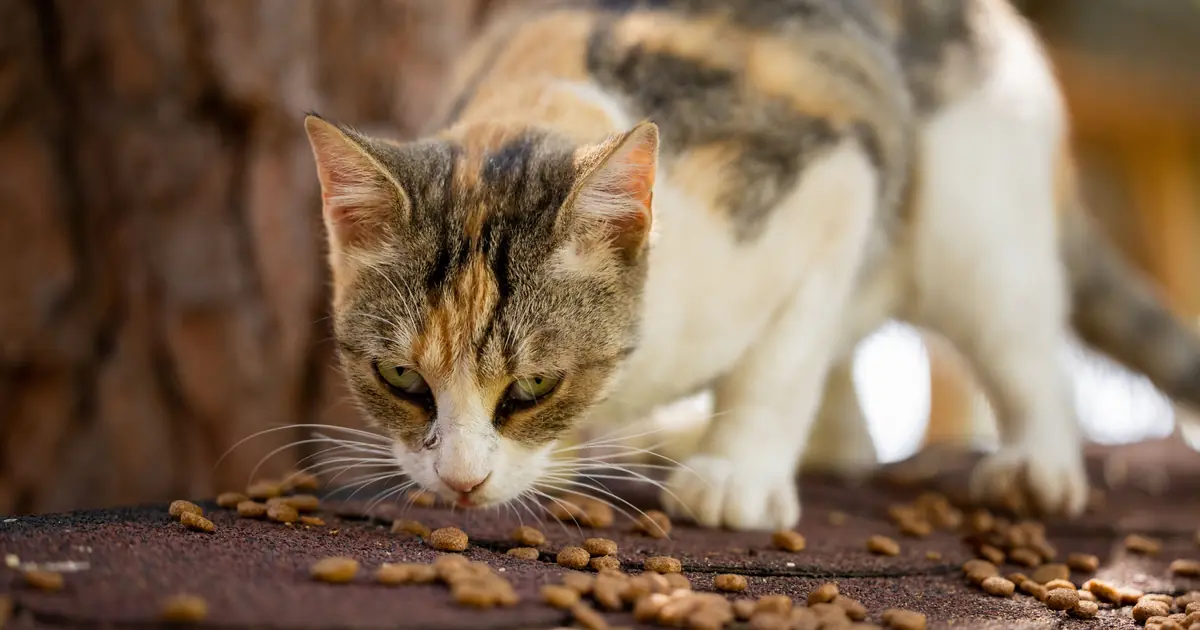
If you’ve ever grabbed a case of Friskies off the grocery store shelf and then felt a little guilty about it later, you’re in good company. It’s one of the best-selling cat food brands in the country, and your cat probably acts like it’s the best thing that’s ever happened to her. But “cheap and everywhere” and “actually good” aren’t the same question, and it’s a fair one to ask.
Here’s the short version: Friskies isn’t junk food, and it isn’t going to hurt a healthy cat eating it every day. It’s also not a premium, high-meat food. It sits at the budget end of the shelf for a reason, and knowing exactly why helps you decide if it belongs in your cat’s bowl long term.
- Friskies foods carry an AAFCO “complete and balanced” statement, meaning they meet the minimum nutrient profile a cat needs from a single food.
- Friskies uses budget ingredients like meat by-products, corn, and artificial colors and flavors, instead of higher-percentage named meat.
- Wet Friskies is roughly 78 percent water, which adds real moisture to a cat’s diet compared to dry Friskies kibble.
- Friskies is safe as an everyday food for most healthy adult cats, but cats with allergies, urinary issues, or weight problems often do better on a higher-quality diet.
- Friskies is one of the most affordable cat foods on the market, which is its biggest advantage over premium brands.
Is Friskies good for cats?
Friskies is a reasonable, budget-friendly food for most healthy adult cats, but it isn’t a premium or high-meat option. It’s made by Purina, backed by real nutrition research, and formulated to meet AAFCO’s complete and balanced standard, so it isn’t a nutritionally empty food. Where it falls short of pricier brands is ingredient quality: Friskies leans on meat by-products, corn, and artificial colors and flavors rather than a high percentage of named muscle meat. Think of it the way you’d think of a solid store-brand grocery item: it does the job, it won’t break the bank, and it’s just not the top shelf.
Is Friskies complete and balanced?
Yes. Friskies wet and dry foods carry an AAFCO nutritional adequacy statement, which means they’re formulated to meet the Association of American Feed Control Officials (AAFCO) nutrient profile for a cat’s life stage, usually adult maintenance. “Complete and balanced” means the food supplies everything a cat needs (protein, fat, vitamins, and minerals) without extra supplements, so it can be fed as a cat’s only food. That’s a real, meaningful bar to clear, and Friskies clears it. Complete and balanced is a floor, though, not a ceiling. It tells you a food is nutritionally adequate, not that it uses the best possible ingredients to get there.
What’s actually in Friskies cat food?
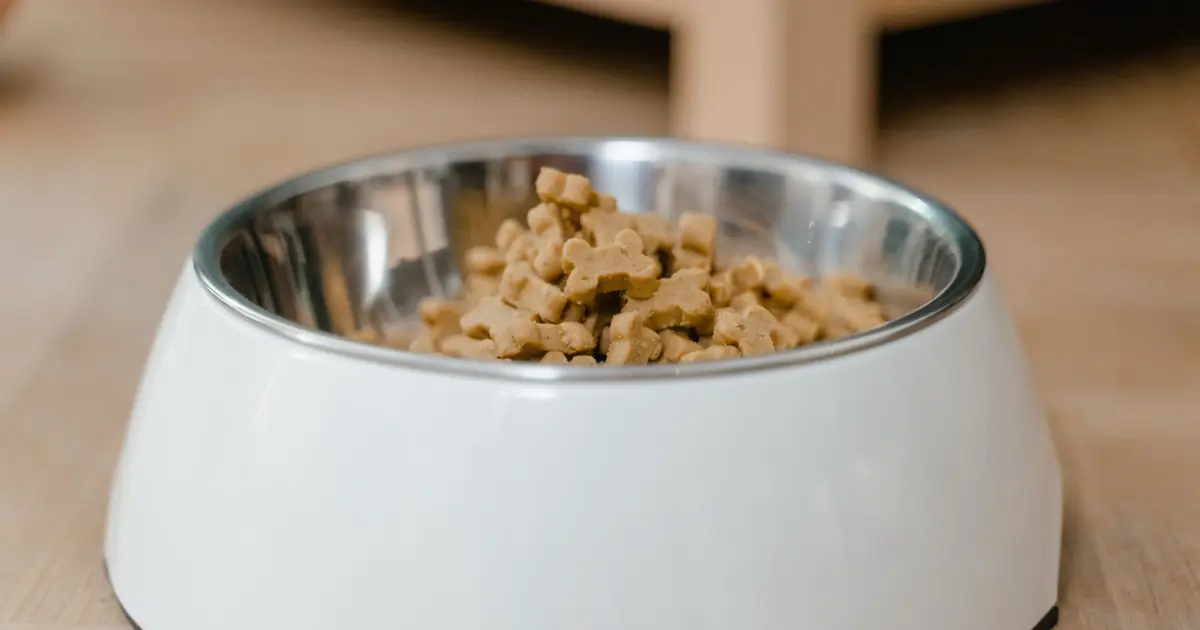
Friskies recipes typically list water or broth, meat by-products, and grains like corn or wheat gluten among the first few ingredients, along with a named meat like chicken or salmon. Meat by-products are organ meats and other animal parts beyond muscle tissue, and they’re not inherently unsafe (liver and kidney are actually nutrient-dense), but they’re less specific than named cuts and harder for you to evaluate. Many Friskies wet foods also use artificial colors and flavors to make the food look and smell more appealing, which has more to do with catching your eye in the can than your cat’s nutrition. If you’re comparing labels, this is the main gap between Friskies and pricier wet cat food brands that skip by-products and dyes.
What are the real pros of feeding Friskies?
Friskies’ biggest strengths are price, availability, and palatability. It’s one of the most affordable complete cat foods sold, which matters a lot if you’re feeding multiple cats or working with a tight budget. It’s sold in nearly every grocery store and pharmacy in the country, so you’re never far from a can. Cats also tend to find it genuinely tasty, which counts for something when you’re dealing with a picky eater who turns her nose up at pricier food. And the wet varieties bring real moisture into your cat’s diet, which matters more than people expect since cats evolved from desert animals with a weak thirst drive.
What are the downsides of Friskies?
The honest downsides are ingredient quality, not safety. Friskies leans on fillers like corn and meat by-products instead of a high percentage of named muscle meat, uses artificial colors and flavors that add nothing nutritionally, and its dry formulas run heavier on carbohydrates than grain-free or higher-protein competitors. None of that makes Friskies dangerous for a healthy cat. It just means a cat eating Friskies dry food exclusively is getting less moisture and, in some formulas, less named protein than she would on a pricier food. If your cat has a sensitive stomach or a diagnosed condition, these lower-cost ingredients are more likely to matter.
Is Friskies okay as an everyday food?
Yes, Friskies is fine as an everyday food for most healthy adult cats, since it’s formulated to be a complete diet on its own. Plenty of cats eat Friskies their whole lives without issue. The trade-off is ingredient quality, not adequacy: you’re choosing a food that meets the nutritional minimum with budget ingredients, rather than a food built around a high percentage of named meat. If your cat is healthy, active, and maintaining a good weight on Friskies, there’s no urgent reason to switch. If you have room in the budget and want to upgrade, a food with named meat as the first two or three ingredients and no artificial colors is a step up.
Wet Friskies vs. dry Friskies: what’s the difference?
Wet Friskies is roughly 78 percent water, while dry Friskies kibble contains only about 8 to 10 percent moisture, so the wet formula does far more for hydration. That moisture gap matters because cats descended from desert-dwelling ancestors and naturally have a low thirst drive, meaning cats fed only dry food often don’t drink enough to make up the difference. Dry Friskies is more convenient (it doesn’t spoil sitting out) and typically cheaper per calorie, which is why many cat parents feed it as the base diet with wet Friskies mixed in a few times a week. If your cat has ever dealt with urinary crystals or you’re just trying to boost water intake, leaning more toward the wet varieties is a genuinely good move.
| Factor | Friskies (budget food) | Premium Cat Food |
|---|---|---|
| First ingredient | Water/broth or named meat, plus by-products | Named meat, high percentage |
| Fillers (corn, wheat gluten) | Common in several recipes | Often minimal or none |
| Artificial colors/flavors | Present in many wet varieties | Rare |
| Complete and balanced | Yes, per AAFCO | Yes, per AAFCO |
| Price per can/pound | Low | Higher, often 2 to 4 times more |
Who might want to upgrade from Friskies?
Cats with diagnosed allergies, urinary problems, or weight issues often do better on a food more specific to their needs than Friskies’ general-purpose formulas. A cat with a suspected food allergy usually needs a limited-ingredient diet with one clear protein source, which is hard to guarantee with by-product-heavy recipes. A cat prone to urinary crystals benefits from a food built to manage mineral content and boost water intake, more than a standard wet food provides. And a cat carrying extra weight often needs a controlled-calorie food, since Friskies’ carb-heavier dry formulas can make weight loss harder. If your cat always seems hungry or you’re not sure if she’s underweight, that’s worth a vet visit before you change food, since both can point to something other than diet.
Every cat is different, and what works fine for one cat can be the wrong fit for another. If your cat has a health condition, is overweight or underweight, or you’re just unsure what to feed her long term, talk to your vet before settling on a diet. This article is educational and isn’t a substitute for veterinary advice.
Frequently Asked Questions About Friskies Cat Food
Q: Is Friskies bad for cats?
No, Friskies isn’t bad for healthy cats. It’s complete and balanced per AAFCO standards, meaning it meets a cat’s basic nutrient needs, though it uses lower-cost ingredients like by-products and corn instead of higher-percentage named meat.
Q: Why do vets not recommend Friskies?
Some vets prefer higher-meat, lower-filler foods over Friskies, but that’s a preference for ingredient quality, not a safety warning. Friskies still meets AAFCO’s complete and balanced standard, so plenty of vets are fine with healthy cats eating it.
Q: Does Friskies cause health problems in cats?
Friskies isn’t linked to health problems in healthy cats eating it as directed. Cats with pre-existing conditions like allergies, urinary issues, or obesity may do better on a more specific diet, since Friskies’ general formulas aren’t built to manage those conditions.
Q: Is Friskies wet food better than dry food?
Wet Friskies adds significantly more moisture, roughly 78 percent water compared to about 8 to 10 percent in dry kibble, which supports hydration and urinary health. Many cat parents feed a mix of both for convenience and hydration benefits.
Q: Does Friskies contain real meat?
Yes, most Friskies recipes list a named meat like chicken, salmon, or turkey, but often alongside meat by-products and broth rather than a high percentage of pure muscle meat. Check the specific product’s ingredient list, since it varies by recipe.
Q: Is Friskies grain-free?
No, most Friskies recipes contain grains like corn or wheat gluten as a protein and carbohydrate source. If you’re looking for a grain-free option, check the label carefully, since Friskies’ standard lines are not grain-free.
Q: Can kittens eat Friskies?
Kittens should only eat Friskies products specifically labeled for kittens or “all life stages,” since kittens need more protein and fat for growth than an adult maintenance formula provides. Check the label before feeding any adult Friskies to a kitten.
Q: What’s the difference between Friskies and more expensive cat food?
The main differences are ingredient quality and price: premium foods use a higher percentage of named muscle meat, skip artificial colors and flavors, and typically cost two to four times more per pound. Friskies trades some of that ingredient precision for a much lower price while still meeting AAFCO’s complete and balanced standard.

Hello and welcome to The Ideal Cat!
We are some passionate cat owners from different professions. We love our cats and have a lot of experience in how to care for our pets. We are incredibly excited to share our knowledge, experience, and research with you. So you can take good care of your loving cat. We will answer most of the common questions about owning cats, taking care of them, etc. If you have any question contact with us. Thanks for visiting! Enjoy the content.
