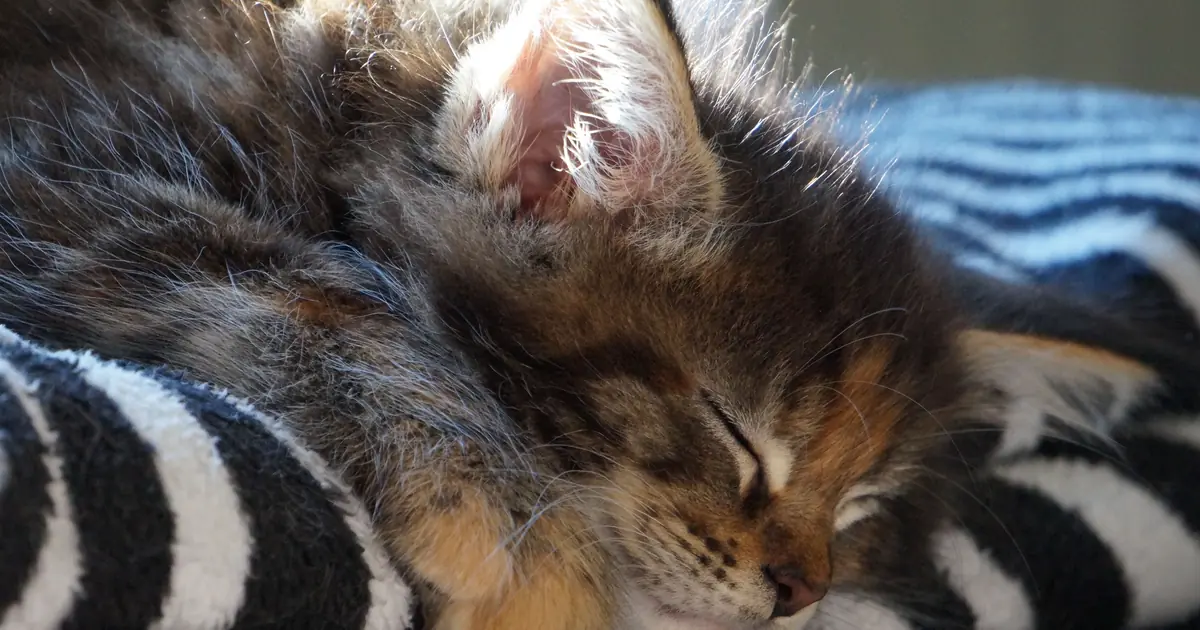
Your new kitten was a whirlwind of chaos five minutes ago, and now it’s passed out cold in a food bowl. Kittens really do go from zero to sixty to fast-asleep in record time.
Here’s why all that sleeping is exactly what a growing kitten should be doing.
- Kittens sleep about 16 to 20 hours a day, more than adult cats, and it’s completely normal.
- Sleep powers growth: growth hormone is released during deep sleep.
- Rest also supports brain development, memory, and a strong immune system.
- Newborns sleep almost constantly; sleep gradually decreases as kittens mature.
- See a vet if a kitten is also not eating, lethargic when awake, or hard to rouse.
Why do kittens sleep a lot?
Kittens sleep a lot because their bodies and brains are growing at an incredible pace, and sleep is when much of that growth happens. During deep sleep, a kitten’s body releases growth hormone, builds muscle and bone, and develops its nervous system. Add in the sheer effort of exploring, playing, and learning about the world while awake, and it’s no wonder kittens crash hard. Lots of sleep isn’t laziness, it’s a biological necessity for healthy development.
How many hours a day should a kitten sleep?
A kitten typically sleeps around 16 to 20 hours a day, though it varies with age. Newborns sleep almost constantly, waking mainly to nurse, while older kittens have longer, more energetic play sessions between naps. This is more sleep than a typical adult cat (which averages 12 to 16 hours). The pattern is short bursts of intense activity followed by deep, restorative naps, sometimes falling asleep mid-play in the most adorable places.
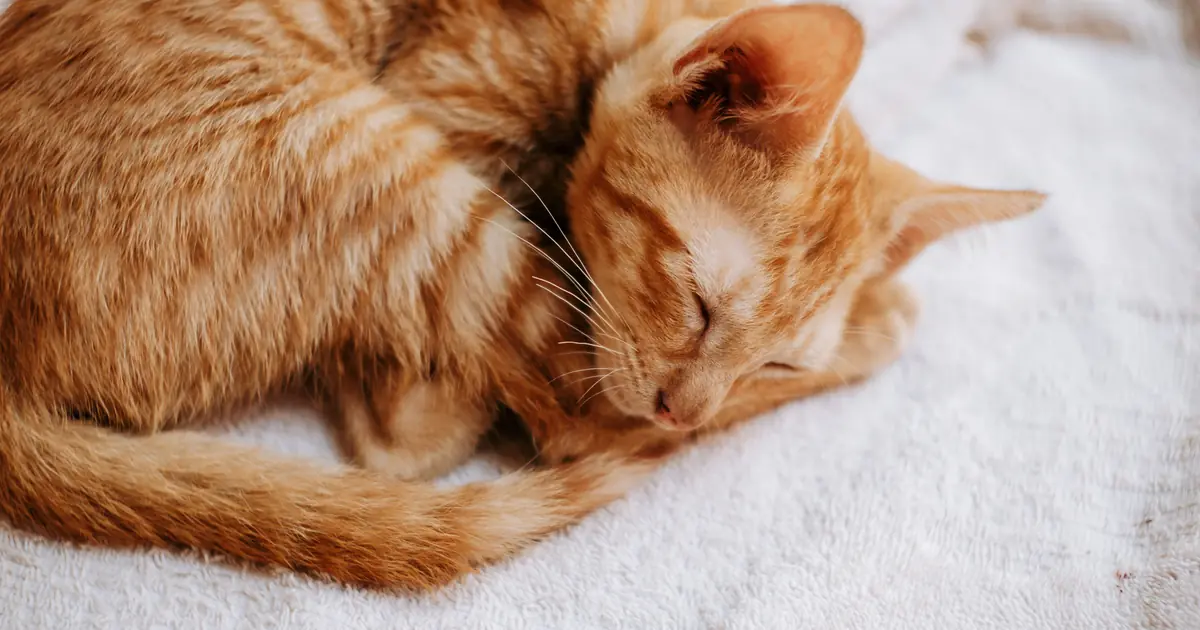
What does sleep do for a growing kitten?
Sleep supports nearly every part of a kitten’s rapid development. Its key jobs:
- Physical growth: growth hormone releases during deep sleep to build the body.
- Brain development: sleep helps wire the nervous system and consolidate learning.
- Immune strength: rest supports a developing immune system.
- Energy recovery: naps recharge kittens for their intense play sessions.
All that play between naps matters too, as your kitten burns energy and learns, it gradually settles into adult sleep patterns, a shift we cover in when kittens calm down.
How does kitten sleep change with age?
Kitten sleep decreases gradually as they grow toward adulthood. Newborns (0 to 2 weeks) sleep almost all day, waking only to nurse. By a few weeks old, kittens are awake for longer, playful stretches but still nap heavily. As they approach adulthood (around 10 to 12 months), sleep settles toward the adult 12-to-16-hour range. So a young kitten sleeping far more than your older cat is right on track, the amount naturally tapers with maturity.
Kitten vs adult cat sleep
Here’s how sleep needs compare across life stages.
| Life stage | Typical daily sleep | Pattern |
|---|---|---|
| Newborn kitten (0 to 2 wks) | Nearly all day | Wakes only to nurse |
| Young kitten (weeks to months) | About 16 to 20 hours | Bursts of play, then deep naps |
| Adult cat | About 12 to 16 hours | Naps around dawn/dusk activity |
| Senior cat | Often 16+ hours | More rest again with age |
When is a sleepy kitten a concern?
A lot of sleep is normal, but certain signs alongside it warrant a vet visit. Be concerned if your kitten is not just sleeping but also refusing food, lethargic and weak when awake, hard to wake, or showing symptoms like vomiting, diarrhea, labored breathing, or pale gums. Healthy kittens are energetic and playful during their waking bursts; a kitten that’s dull even when up may be ill. This article is educational and not a substitute for veterinary care, and young kittens can decline quickly, so call your vet promptly if you’re worried. For related kitten basics, see do kittens drink water and cozy sleep habits in why cats sleep in a ball. Trusted kitten-care guidance is available from the ASPCA and International Cat Care.
Frequently Asked Questions
Q: How many hours a day do kittens sleep?
Kittens sleep about 16 to 20 hours a day, and newborns sleep almost constantly. It’s more than adult cats need. All that rest fuels their rapid growth and brain development, so it’s completely normal and healthy.
Q: Is it normal for my kitten to sleep all day?
Yes. Sleeping most of the day, in bursts between energetic play, is normal for kittens. Sleep releases growth hormone and supports brain and immune development. A playful, well-eating kitten that sleeps a lot is right on track.
Q: Why does my kitten fall asleep so suddenly?
Kittens play in intense bursts that quickly exhaust their small bodies, so they crash into deep naps fast, sometimes mid-activity. This rapid switch from full-speed play to deep sleep is normal and part of their growth cycle.
Q: When do kittens start sleeping less?
Sleep gradually decreases as kittens grow. By around 10 to 12 months, most settle toward the adult range of 12 to 16 hours a day. Younger kittens naturally sleep much more, tapering off as they mature.
Q: When should I worry about my kitten sleeping too much?
Worry if excessive sleep comes with not eating, weakness or dullness when awake, difficulty waking, vomiting, diarrhea, or labored breathing. Healthy kittens are lively during waking bursts. If yours seems unwell, contact your vet promptly.
Q: Do kittens sleep more than adult cats?
Yes. Kittens sleep about 16 to 20 hours a day versus roughly 12 to 16 for adult cats, because their bodies and brains are developing rapidly. The extra sleep tapers off as they grow into adulthood.

Hello and welcome to The Ideal Cat!
We are some passionate cat owners from different professions. We love our cats and have a lot of experience in how to care for our pets. We are incredibly excited to share our knowledge, experience, and research with you. So you can take good care of your loving cat. We will answer most of the common questions about owning cats, taking care of them, etc. If you have any question contact with us. Thanks for visiting! Enjoy the content.
