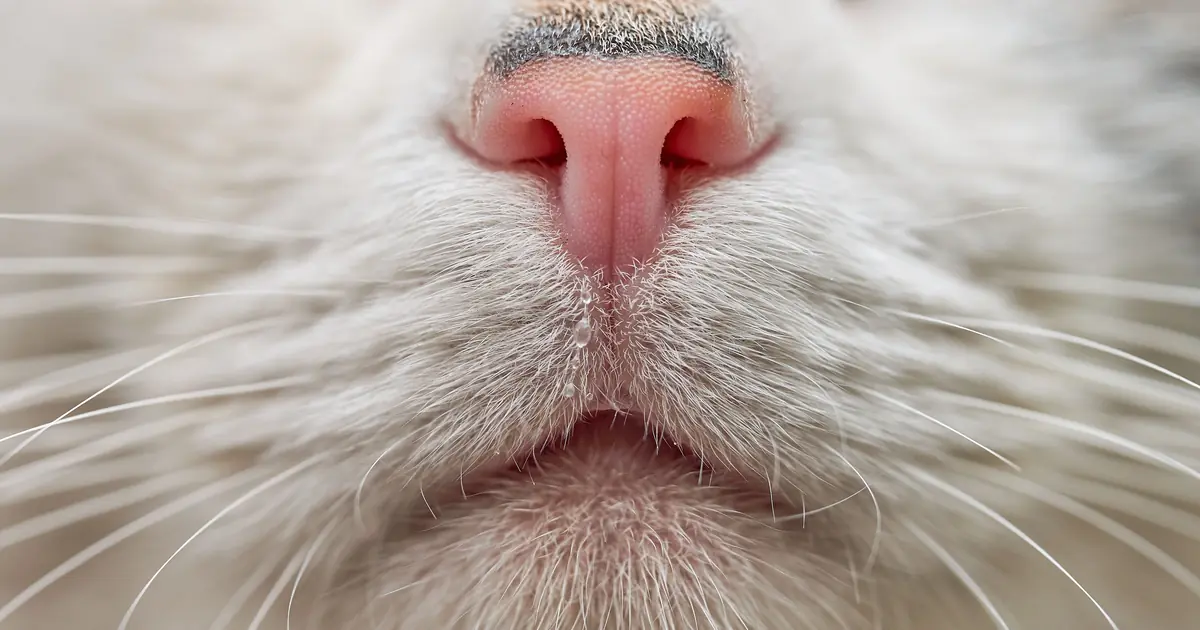
You lean in for a nose boop and your cat’s nose feels dry instead of its usual damp, cool self. Your brain jumps straight to “is she sick?” I get it, that little leathery nose pad (called the nose leather, or planum nasale if you want to get technical) feels like a built-in health gauge, so any change feels like a red flag.
Here’s the thing though: a cat’s nose texture changes constantly, sometimes hour to hour. A dry nose on its own almost never means trouble. This guide walks you through why it happens, when it’s genuinely nothing, and the specific signs that mean it’s time to call your vet.
- A dry cat nose is usually caused by sleep, grooming, warm air, or normal moisture cycles, not illness.
- Nose temperature and moisture do not reliably indicate fever in cats; a thermometer is the only accurate way to check.
- A dry nose becomes a concern when it’s paired with cracking, crusting, bleeding, lethargy, or loss of appetite.
- The skin tent test on the scruff is a quick way to check for dehydration at home.
- Cats with pink or light-colored noses can get sunburned, which shows up as dry, flaky, or reddened skin on the nose.
Why is my cat’s nose dry right now?
Your cat’s nose is dry right now most likely because she just woke up, hasn’t groomed recently, or is sitting near a heater, sunny window, or dry indoor air. Cats don’t sweat through their noses the way people sweat through their skin. Instead, the moisture on a cat’s nose comes mostly from mucus glands inside the nasal passages and from the cat licking her own nose during grooming.
Think about how often your cat naps, and how long she goes between grooming sessions. A nose that felt damp an hour ago can feel bone dry after a two-hour nap in a sunbeam. None of that means anything is wrong. It’s just biology doing its normal thing.
What causes a dry nose in cats?
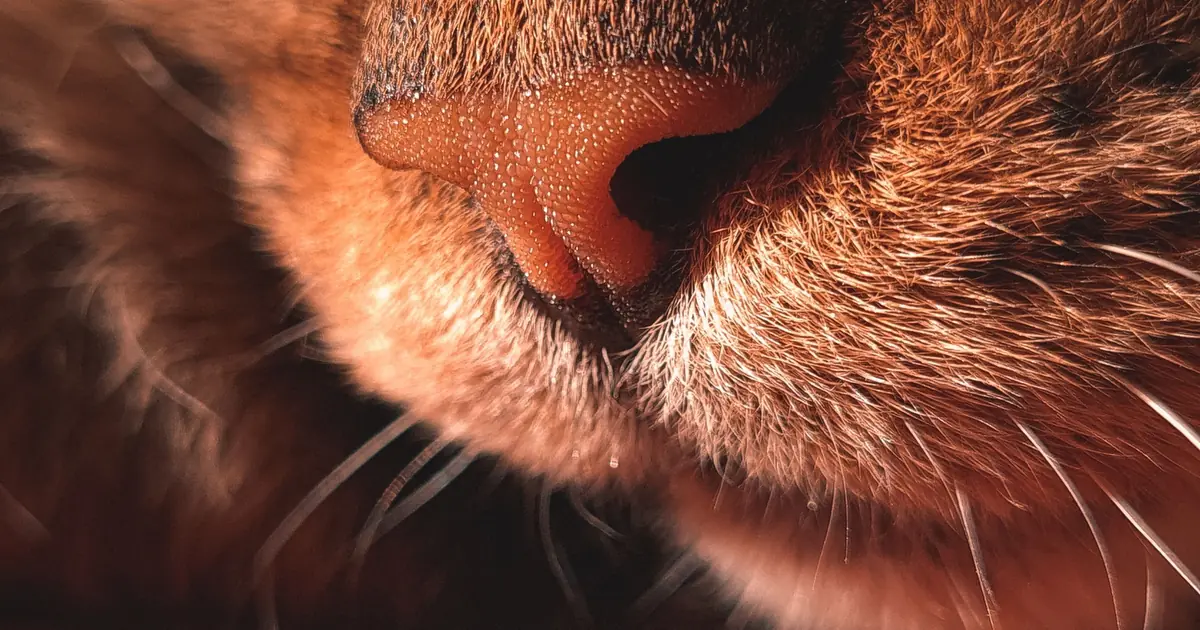
A handful of everyday, harmless factors explain most cases of a dry cat nose. Here’s what’s usually behind it.
- Sleep: cats don’t groom or produce as much nasal moisture while asleep, so noses dry out during naps, and cats sleep 12 to 16 hours a day on average.
- Grooming gaps: licking the nose redistributes moisture and saliva; skip a grooming session and the nose dries out.
- Warm or dry air: sitting by a heater, fireplace, sunny window, or in a room with running AC or a furnace pulls moisture out of the air (and the nose).
- Hydration levels: a cat who’s drinking less water than usual, especially in winter, can have a slightly drier nose.
- Age: older cats often have naturally drier, sometimes rougher-textured noses than kittens.
- Activity level: an active, playing cat tends to have a cooler, damper nose than a relaxed, resting one.
If your cat is eating, drinking, and acting like herself, a dry nose almost always falls into this harmless list.
Does a dry nose mean my cat has a fever?
No. A dry or warm nose does not reliably mean your cat has a fever, and this is one of the most persistent cat myths out there. Nose temperature and moisture swing throughout the day based on sleep, activity, and room conditions, not internal body temperature. According to the ASPCA and veterinary sources, checking a cat’s nose is not a valid way to assess fever.
The only accurate way to know if your cat has a fever is a proper temperature reading, which your vet can do, or you can do at home with guidance from your vet on the right tool and technique. A normal cat body temperature runs between 100.4°F and 102.5°F. Don’t rely on nose-touching as a diagnostic tool. It just isn’t reliable.
When can a dry nose actually signal a problem?
A dry nose becomes worth watching when it comes with cracking, crusting, flaking, bleeding, discoloration, or changes in your cat’s behavior. On its own, dry skin is cosmetic. Combined with other signs, it can point to a real issue.
- Dehydration: along with a dry nose, look for dry or tacky gums, sunken eyes, low energy, and skin that’s slow to bounce back when gently pinched.
- Sunburn: cats with pink or unpigmented noses (common in white cats and some light-colored breeds) can get sunburned from window or outdoor sun exposure, leading to dry, red, flaky, or crusty skin.
- Feline herpesvirus or upper respiratory infection: can cause crusting and discharge around the nose, often paired with sneezing or a runny nose.
- Allergic reactions or irritants: plastic food bowls, certain cleaning products, or environmental allergens can dry out or irritate the nose.
- Autoimmune skin conditions: rare, but conditions like pemphigus can cause crusting and sores on the nose that need veterinary diagnosis.
- Fever or illness: not because of nose dryness itself, but because sick cats often groom less, which lets the nose dry out as a side effect.
How do I know if my cat’s dry nose is harmless or serious?
The difference comes down to whether the dryness is alone or accompanied by other symptoms. A harmless dry nose sits quietly on an otherwise normal, active cat. A concerning dry nose shows up alongside changes you can see or feel elsewhere on your cat’s body.
| Harmless dry nose | Dry nose that needs a vet visit |
|---|---|
| Smooth texture, just dry to the touch | Cracked, flaking, or peeling skin |
| No crust, scabs, or sores | Crusting, scabbing, or open sores |
| Normal nose color for your cat | Redness, discoloration, or swelling |
| Eating, drinking, and playing normally | Not eating, hiding, or low energy |
| Comes and goes through the day | Stays dry for several days straight |
| No discharge from nose or eyes | Nasal discharge, sneezing, or bleeding |
If your cat is hiding and skipping meals along with a dry nose, treat that combination as your cue to call the vet, not the dry nose alone.
How can I tell if my cat is dehydrated?
You can check for dehydration at home with a quick skin tent test and a look at your cat’s gums. Gently pinch and lift the loose skin at the scruff of your cat’s neck, then let go. In a well-hydrated cat, the skin should snap back flat within a second or two. If it stays tented or returns slowly, that’s a sign of dehydration.
You can also press a finger lightly on your cat’s gums. Healthy gums are moist and pink, and the color should return within about two seconds after you release the pressure (this is called capillary refill time). Tacky, dry, or pale gums are worth a call to your vet, especially paired with lethargy or reduced appetite. VCA Hospitals notes that dehydration in cats can develop quickly, especially with vomiting, diarrhea, or reduced water intake, so catching it early matters.
Not sure how much your cat should be drinking in the first place? Check out our guide on how much water a cat should drink a day to know what’s normal for her size.
When should I take my cat to the vet for a dry nose?
Take your cat to the vet if the dry nose comes with cracking, bleeding, crusting, discoloration, nasal discharge, lethargy, appetite loss, or if it simply doesn’t improve after a few days. A dry nose by itself, on a cat who’s otherwise bright, eating, and playful, is not an emergency and rarely needs a vet visit on its own.
Trust the whole picture, not just the nose. Cats are experts at hiding illness, so any nose changes paired with behavior changes deserve attention. If you’re also noticing warm ears, it’s worth knowing that warm ears alone aren’t a reliable fever sign either, for the same reasons a dry nose isn’t.
A quick, calm note: this article is meant to help you understand what’s normal and what’s worth watching, not to replace a veterinarian. If your cat’s nose is dry, cracked, crusty, or discolored and she’s also lethargic, not eating, or showing signs of dehydration, please get her checked out by a licensed vet. Never give your cat any medication or ointment for a nose issue without your vet’s guidance.
How can I keep my cat’s nose healthy day to day?
Keep your cat’s nose healthy by making sure she always has fresh water available, keeping indoor air from getting too dry in winter, and limiting direct sun exposure if she has a pink or light-colored nose. A humidifier during heating season can help if you notice her nose (and skin in general) getting flaky.
Watch her water bowl, not just her nose, since cats that get cold in winter sometimes drink less, which can compound normal seasonal dryness. Regular vet checkups also catch subtle changes long before they become obvious problems.
Frequently Asked Questions
Q: Is a dry nose normal for cats?
Yes, a dry nose is normal for cats and happens throughout the day depending on sleep, grooming, and room conditions. It only becomes a concern when paired with cracking, crusting, or behavior changes like lethargy or appetite loss.
Q: Does a warm dry nose mean my cat has a fever?
No, nose temperature and moisture are not reliable fever indicators in cats. The only accurate way to check is a proper temperature reading, and a normal cat’s temperature runs between 100.4°F and 102.5°F.
Q: Why is my cat’s nose dry and cracked?
A dry, cracked nose can result from sunburn on light-colored noses, dehydration, or skin conditions like feline herpesvirus, allergic reactions, or autoimmune disease. Cracking or peeling skin is a sign to have your vet take a look.
Q: How do I check if my cat is dehydrated?
Gently pinch the loose skin at your cat’s scruff and let go. Skin that snaps back within a second or two is normal, while skin that stays tented suggests dehydration. Tacky or pale gums are another sign worth checking.
Q: Can indoor heating cause my cat’s dry nose?
Yes, running heaters and furnaces lower indoor humidity, which can dry out a cat’s nose and skin during colder months. A humidifier in the room your cat spends the most time in can help.
Q: Should I put lotion or Vaseline on my cat’s dry nose?
No, avoid putting lotion, Vaseline, or human skin products on your cat’s nose since she’ll likely lick it off and it isn’t formulated to be swallowed. If the dryness looks severe or cracked, ask your vet for a pet-safe recommendation instead.
Q: Can white or pale-nosed cats get sunburned?
Yes, cats with pink or unpigmented noses lack the protective melanin darker noses have, making them prone to sunburn from window or outdoor sun exposure. Watch for redness, flaking, or crusting after time in direct sun.
Q: When is a dry nose a sign of a bigger problem?
A dry nose is worth a vet visit when it’s paired with cracking, crusting, bleeding, discoloration, nasal discharge, lethargy, or a drop in appetite. On its own, without other symptoms, a dry nose is rarely a medical concern.

Hello and welcome to The Ideal Cat!
We are some passionate cat owners from different professions. We love our cats and have a lot of experience in how to care for our pets. We are incredibly excited to share our knowledge, experience, and research with you. So you can take good care of your loving cat. We will answer most of the common questions about owning cats, taking care of them, etc. If you have any question contact with us. Thanks for visiting! Enjoy the content.
)