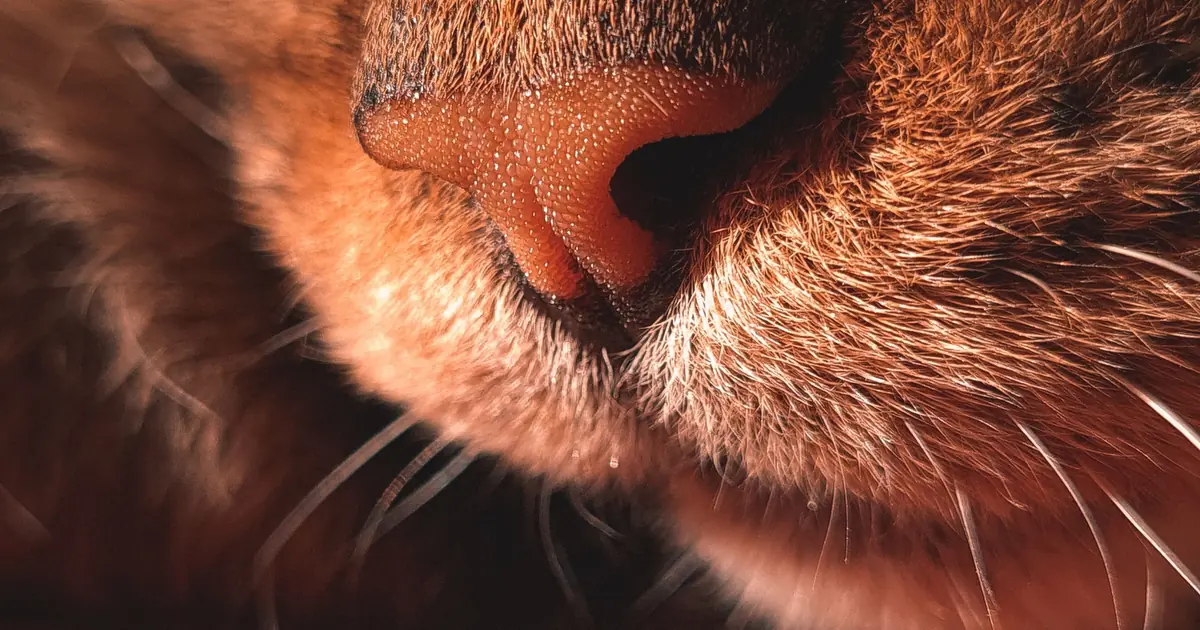
You boop your cat’s nose and, brrr, it’s cold and a little damp. Then an hour later it’s warm and dry. Is something wrong? Should the nose always be one or the other?
Good news: a changing nose temperature is completely normal. Here’s what’s actually going on up there.
- Cold noses are normal, driven by temperature regulation, evaporation, and the surrounding environment.
- A cat’s nose is moist, and evaporating moisture cools the surface, just like sweat cools skin.
- Nose temperature and wetness change constantly through the day and mean little on their own.
- The old “cold wet nose = healthy, warm dry nose = sick” idea is a myth for cats.
- Judge health by appetite, energy, and behavior, not nose temperature, and see a vet for real symptoms.
Why are cats’ noses cold?
A cat’s nose is cold mainly because of normal temperature regulation and evaporation. The nose has a moist surface, and as that moisture evaporates it cools the skin, the same cooling effect as sweat on us. Blood flow to the nose also shifts as a cat manages its body temperature, and the room’s air temperature plays a part. Put together, a cool, slightly damp nose is simply a cat’s nose doing its job.
Is a cold nose normal for cats?
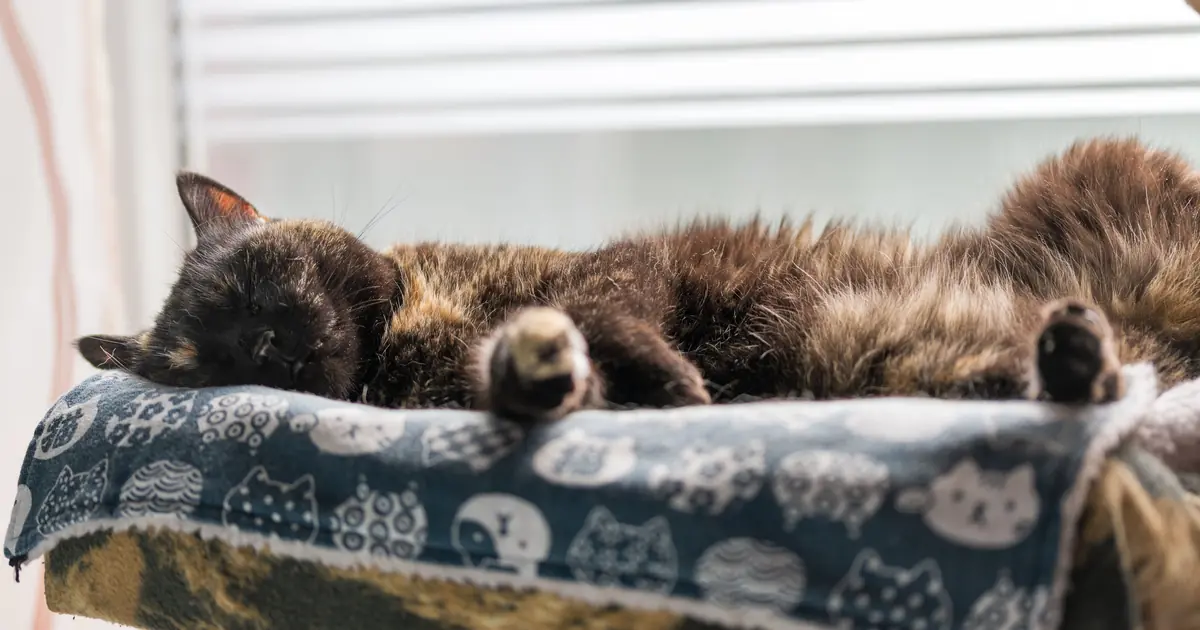
Yes, a cold nose is perfectly normal, and so is a warm one. Nose temperature naturally fluctuates throughout the day depending on activity, environment, and where your cat has been resting. A cat that just woke up in a sunny spot may have a warm nose; one lying by a window may have a cold one. Neither tells you much by itself.
Does a cold nose mean my cat is cold?
Not necessarily. A cool nose reflects the nose’s surface and blood flow more than your cat’s core temperature. Still, cats do seek warmth and can get chilly in cold rooms, so if your cat is also curling up tightly, shivering, or hiding heat sources, the environment may be too cold, which we cover in do cats get cold. The nose alone isn’t the signal, your cat’s behavior is.
Is the “warm nose means sick” myth true?
No, that’s a myth. You can’t diagnose illness or fever by feeling a cat’s nose. A warm, dry nose can appear in a perfectly healthy cat that’s been napping or grooming, and a sick cat can have a cool, wet nose. The only reliable way to check for fever is a proper temperature reading, and real illness shows up in appetite, energy, and behavior, not nose feel. If your cat truly feels hot all over, see why your cat feels hot.
When should a cat’s nose actually worry you?
Focus on the nose’s appearance and discharge, not its temperature. Here’s what matters.
| Normal | Worth a vet check |
|---|---|
| Cool or warm, changing through the day | Thick, colored, or bloody nasal discharge |
| Slightly moist or briefly dry | Crusting, sores, or a cracked, painful nose |
| Cat eating, playing normally | Sneezing, congestion, or trouble breathing |
| No other symptoms | Lethargy, appetite loss, or a persistently dry, sore nose |
A persistently dry or crusty nose has its own causes, covered in why a cat’s nose is dry and the black crust on a cat’s nose.
When should you see a vet?
See a vet not for a cold nose, but for symptoms: nasal discharge, sneezing, congestion, sores, or a cracked painful nose, especially with lethargy or appetite loss. This article is educational and not a substitute for veterinary care. For temperature and health questions, the PetMD and VCA resources are reliable, and your vet is the only way to accurately check for fever.
Frequently Asked Questions
Q: Is it normal for my cat’s nose to be cold and wet?
Yes. A cool, slightly damp nose is normal, moisture evaporating from the surface cools it. Nose temperature and wetness change throughout the day and don’t indicate illness on their own.
Q: Does a warm nose mean my cat has a fever?
No. You can’t detect a fever by feeling a cat’s nose, that’s a myth. A warm, dry nose is common in healthy cats after napping. Only a proper temperature reading can confirm a fever.
Q: Why does my cat’s nose change from cold to warm?
Nose temperature naturally fluctuates with activity, blood flow, and the environment. A cat resting by a window may have a cold nose; one in a sunny spot may have a warm one. Both are normal.
Q: Should I worry if my cat’s nose is cold?
No. A cold nose alone is normal and not a sign of illness. Judge your cat’s health by appetite, energy, and behavior, and watch for nasal discharge or sneezing rather than nose temperature.
Q: Can a cold nose mean my cat is too cold?
Not by itself. But if your cat is also curling up tightly, shivering, or seeking heat, the room may be too cold. Look at overall behavior, not just the nose.
Q: When is my cat’s nose a health concern?
When you see thick or bloody discharge, crusting, sores, a cracked painful nose, sneezing, or congestion, especially with lethargy or appetite loss. Those symptoms, not a cold nose, warrant a vet visit.

Hello and welcome to The Ideal Cat!
We are some passionate cat owners from different professions. We love our cats and have a lot of experience in how to care for our pets. We are incredibly excited to share our knowledge, experience, and research with you. So you can take good care of your loving cat. We will answer most of the common questions about owning cats, taking care of them, etc. If you have any question contact with us. Thanks for visiting! Enjoy the content.
