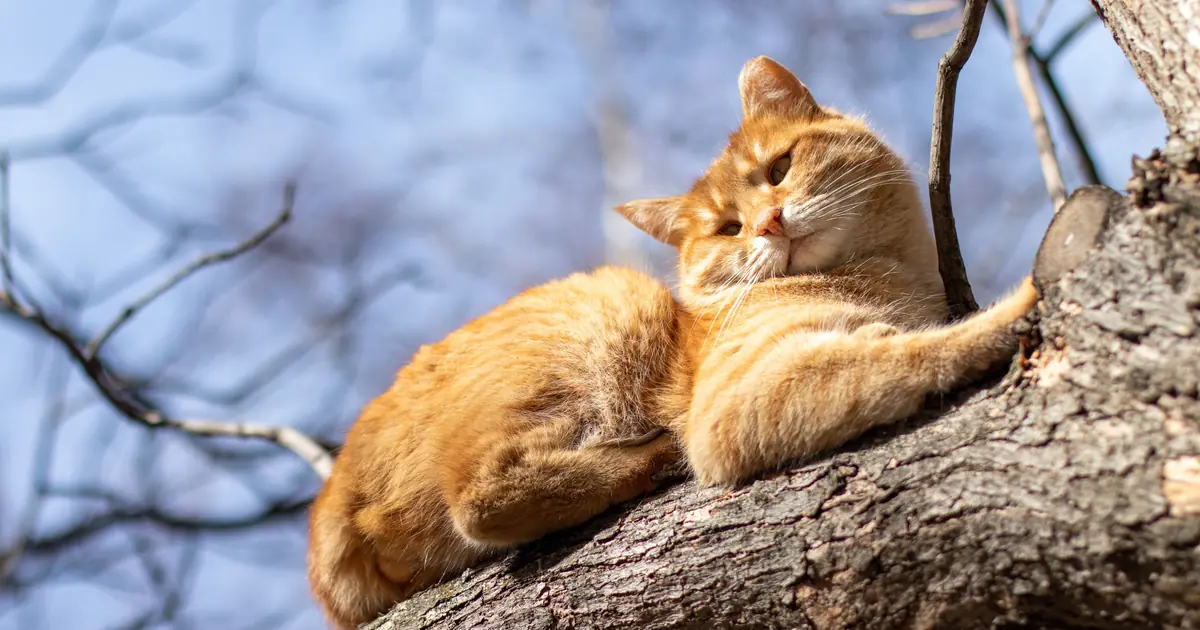
You hear it before you see it: a frantic yowl coming from somewhere above your head. You look up and there’s your cat, twenty feet up an oak tree, clinging to a branch and looking miserable. She got up there just fine. Coming down is a different story.
If this sounds familiar, you’re not alone. Cats getting stuck in trees is one of the most common calls animal control and tree services get, and there’s a real physical reason for it. Once you understand what’s happening with your cat’s claws in that moment, the whole thing makes a lot more sense, and you’ll know exactly what to do next time.
- Cats can technically climb down trees, but their claws curve backward, which grips well going up but not coming down headfirst.
- The correct way for a cat to descend a tree is backward, tail-first, using its hind claws for grip the same way it climbed up.
- Most cats get stuck because fear freezes them, not because they’re physically incapable of getting down.
- A healthy adult cat can usually survive a day or two up a tree without food or water, since dehydration and weather are the bigger risks, not the height itself.
- Most fire departments will not respond to a cat stuck in a tree; a tree service, animal control, or a wildlife rescue group is usually your best call.
Can Cats Climb Down Trees?
Yes, cats can climb down trees, but it takes more coordination and nerve than climbing up does. Going up is almost automatic: dig the front claws into the bark, pull, repeat. Coming down asks a cat to move backward, blind to what’s below, trusting its back legs to do the work. That’s a harder skill, and plenty of cats freeze the first time they try it.
Why Is Coming Down So Much Harder Than Going Up?
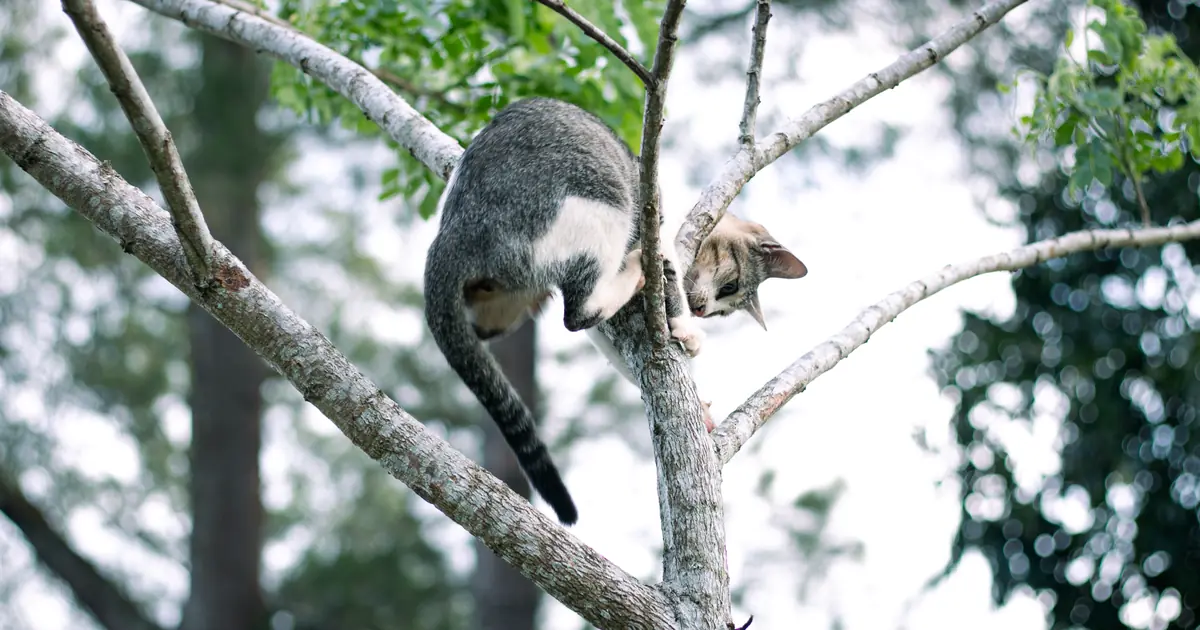
Coming down is harder because a cat’s claws curve to catch on the way up, not the way down. Picture a fishhook: it grabs beautifully in one direction and slides right past bark in the other. When a cat tries to descend headfirst, those curved claws just skid along the trunk instead of catching, and there’s nothing stopping a slide except luck.
Squirrels don’t have this problem, since their back ankles rotate almost 180 degrees, letting their hind claws point uphill while the squirrel faces down. Domestic cats don’t have that ankle mobility. Cats do have knees, plus hips and ankles that bend in typical mammal fashion, but nothing that rotates the back paw that way. And since cats don’t have opposable thumbs to grab a branch for a controlled descent, a cat stuck twenty feet up is working with a limited toolkit.
What’s the Correct Way for a Cat to Climb Down a Tree?
The correct way for a cat to descend is backward, tail-first, gripping the bark with its hind claws the whole way down, essentially reversing the climb up. A confident, tree-savvy cat makes it look almost lazy: a slow backward shuffle, tail out for balance. It works because the claws are always pulling in the direction they’re built for. The catch is that backing down blind isn’t instinctive for most house cats, especially ones that spend more time on the sofa than up an oak. It’s a learned skill, and outdoor cats who climb regularly are usually much better at it than an indoor cat who bolted up a trunk in a panic.
Why Do Cats Get Stuck in Trees in the First Place?
Cats usually get stuck because fear takes over before instinct can kick in, not because they’re physically unable to get down. A cat that raced up a tree to escape a dog, a car, or a loud noise is running on pure adrenaline. Cats run and climb to escape a perceived threat, and once that threat is gone, the height itself becomes the new scary thing. A few things tend to happen next: the cat tries climbing down headfirst and scrambles back up when its claws slip, the height triggers a freeze response and the cat just clings and yowls, or the drop is genuinely too far to jump.
Cats are famously flexible and quick, which is exactly what got them up the tree so fast. That same adrenaline doesn’t help much with the slow, deliberate backward crawl a safe descent actually needs.
How Long Can a Cat Safely Stay Stuck in a Tree?
A healthy adult cat can usually stay safely stuck in a tree for a day or two, since dehydration and weather exposure are the real dangers, not the height itself. Most calm down and climb on their own once the fear passes, often overnight while nobody’s watching. According to PetMD, most cats come down within 24 to 48 hours once they work up the nerve.
That window shrinks fast for a kitten, a senior cat, a cat with a health condition, or any cat stuck during a heat wave or a storm. Those cats are at real risk sooner than the “day or two” rule of thumb suggests.
What Should You Do If Your Cat Is Stuck in a Tree?
Give your cat time and a calm environment before trying anything dramatic. A frightened cat clinging to a branch isn’t thinking clearly, and a crowd yelling up at it usually makes things worse.
- Step back, quiet the area, and give the cat 15 to 30 minutes to settle and try coming down on its own.
- Lure your cat down with something familiar: a treat, a can of tuna, or a familiar voice. Knowing how to calm a scared cat helps, since a less panicked cat is more likely to attempt the climb.
- Leave food and water at the base of the tree overnight if your cat hasn’t come down by dark. Many descend once everyone’s gone to bed.
- If it’s been over 24 hours, the cat seems distressed or injured, or the weather’s turned dangerous, call a professional instead of attempting a rescue yourself.
Climbing up after your cat yourself is rarely a good idea. You risk a fall, and a startled cat may claw or bolt higher rather than let itself be grabbed.
Who Should You Call for a Cat Stuck in a Tree?
Call a tree service, animal control office, or a local wildlife rescue group, not the fire department. Most fire departments have a policy against tree rescues, since the injury risk to firefighters is high and they need to stay available for real emergencies. A licensed arborist has the harnesses and bucket trucks to reach a cat safely, and many will do it for a modest fee or free.
| Situation | What To Do |
|---|---|
| Just went up (under an hour) | Give it space, stay quiet, and let the cat try to come down on its own first. |
| Stuck a few hours | Try luring with food, a favorite toy, or a familiar voice from the ground. |
| Stuck 24 hours or more | Call a tree service, animal control, or a local wildlife/animal rescue group for help. |
| Injured or in bad weather | Call a professional rescue immediately, and get your cat to a vet afterward for a check. |
How Can You Prevent Your Cat From Getting Stuck Again?
The best way to prevent a repeat tree rescue is to limit the triggers that send your cat running up one, and supervise outdoor time. A cat that bolts up a tree is usually fleeing something: a dog, a stranger, a loud truck, or another cat.
- Supervise outdoor time instead of letting your cat roam free, especially near dogs, wildlife, or busy roads.
- Consider a catio or fully enclosed outdoor run, which gives fresh air and sunshine without the climbing risk.
- Try harness and leash walks for controlled outdoor time, which plenty of cats genuinely enjoy once used to the gear.
- Keep trees near your yard trimmed of low branches your cat can use as a launch point.
International Cat Care notes that secure fencing and enclosed outdoor spaces give a cat outdoor access without the risks of free roaming.
A quick safety note: this article is educational, not a substitute for professional help. If your cat has been stuck more than a day or two, seems injured, is in extreme heat or cold, or falls during the ordeal, get a licensed rescue professional involved and have a veterinarian check your cat over afterward. Falls can cause hidden injuries that aren’t obvious right away, and VCA Animal Hospitals recommends a vet exam after any significant fall, even if your cat seems fine.
Frequently Asked Questions
Q: Can cats climb down trees on their own?
Yes, most cats eventually climb down on their own once they calm down. It takes longer than climbing up did, but most manage it within a day or two without help.
Q: Why do cats get stuck in trees but not squirrels?
Squirrels have hind ankles that rotate nearly 180 degrees, letting their back claws grip bark on the way down while facing downward. Cats lack that ankle mobility, so they have to back down tail-first, which is a much harder move to pull off in a panic.
Q: Will the fire department get my cat out of a tree?
Usually not. Most fire departments have a policy against tree rescues for cats because of the injury risk to firefighters. A tree service, animal control office, or local wildlife rescue group is a better first call.
Q: How long can a cat stay in a tree without food or water?
A healthy adult cat can typically manage a day or two without serious harm, since dehydration and exhaustion, not hunger alone, are the real risks. Kittens, senior cats, and cats stuck in extreme heat or cold need help much sooner.
Q: Should I climb up and get my cat myself?
It’s not a good idea in most cases. You risk a serious fall, and a frightened cat may scratch, bite, or bolt higher rather than let you grab it. Luring it down with food or a familiar voice, or calling a professional, is safer for both of you.
Q: Why did my cat run up a tree in the first place?
Cats climb trees to escape something they see as a threat, like a dog, a stranger, or a loud noise. The same adrenaline that sends them up the trunk in seconds doesn’t help them get back down, since a careful backward climb needs calm, not panic.
Q: Does leaving food at the base of the tree help?
Yes, food at the base of the tree, especially something strong-smelling like tuna, often gives a stuck cat the motivation to attempt the climb down once fear starts to fade. Many cats come down overnight once everyone’s stepped away and quieted down.
Q: Can a cat get hurt falling out of a tree?
Yes, a fall from a significant height can cause fractures or internal injuries, even though cats have excellent righting reflexes. Any cat that falls during a rescue attempt should be checked by a veterinarian, since some injuries aren’t obvious right away.

Hello and welcome to The Ideal Cat!
We are some passionate cat owners from different professions. We love our cats and have a lot of experience in how to care for our pets. We are incredibly excited to share our knowledge, experience, and research with you. So you can take good care of your loving cat. We will answer most of the common questions about owning cats, taking care of them, etc. If you have any question contact with us. Thanks for visiting! Enjoy the content.
