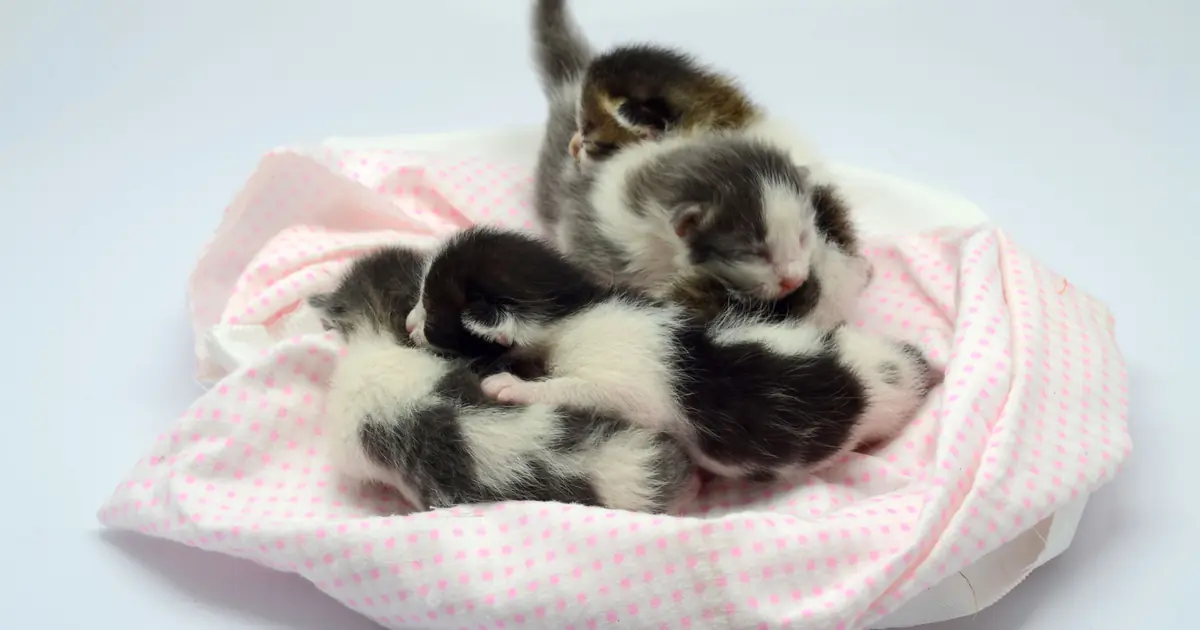
Picture this: a box of tiny, blind, squirming kittens shows up in your garage, or your own cat just gave birth on your bed. Your hands are itching to scoop one up and cuddle it. Then someone tells you not to touch them at all, or mom will abandon them forever.
That old warning has scared off generations of well-meaning cat parents, and honestly, it’s mostly wrong. Newborn kittens can be touched. The real question isn’t whether you’re allowed to, it’s how much, how often, and how carefully. Let’s walk through what actually helps and what just adds stress to a household that’s already running on very little sleep.
- You can touch newborn kittens, but brief, gentle handling in the first two weeks is safest for both mom and babies.
- A healthy mother cat will not reject her kittens just because a human touched them, according to feline behavior experts at International Cat Care.
- Newborn kittens can’t regulate their own body temperature well until around 3 to 4 weeks old, so short handling sessions matter.
- Gentle handling from about 2 to 7 weeks of age helps kittens grow into friendly, well-socialized cats.
- A kitten that feels cold, won’t nurse, or cries nonstop needs a vet’s attention right away, not just more handling.
Can You Touch Newborn Kittens?
Yes, you can touch newborn kittens, and doing so occasionally won’t hurt them or upset a healthy mother cat. Newborns are blind, deaf, and completely dependent on mom for warmth and food during their first two weeks of life. A quick, gentle check to make sure everyone looks alert and is nursing is perfectly fine, and it’s actually a normal part of caring for a litter.
What matters is keeping it short. A minute or two of gentle handling, once or twice a day, is plenty. This isn’t the time for long cuddle sessions. Newborns need to spend almost all of their time nursing, sleeping, and staying pressed against mom and littermates for warmth.
Will a Mother Cat Reject Her Kittens If You Touch Them?
No, a healthy mother cat will not reject her kittens just because a person touched them. This is one of the most persistent myths in cat care, and it simply doesn’t hold up. Cats identify their kittens mainly through a mix of scent, sound, and familiarity built over time, not a single whiff of human hands.
Even so, a first-time mom or a mother who feels unsafe can get stressed by too much fuss around the nest. A stressed cat may move her kittens to a new hiding spot, groom them excessively, or seem agitated. That’s not rejection over your scent, it’s a response to feeling watched or disturbed. The fix is simple: keep visits short, keep the room calm, and let her lead.
Why Should You Limit Handling During the First Two Weeks?
You should limit handling in the first two weeks mainly to protect mom’s stress levels and the kittens’ fragile body temperature. Newborn kittens can’t shiver to warm themselves up until they’re several weeks old, so time away from mom’s body heat, even a few minutes, can drop their temperature faster than you’d expect.
There’s also the immunity angle. Kittens are born with very little natural immune protection of their own. As the Cornell Feline Health Center explains, newborns rely on colostrum, the antibody-rich first milk, in those early hours and days to build up defenses. Constant handling means less time nursing, which means less of that protective milk. None of this means “never touch them.” It just means the newborn stage calls for short, purposeful visits rather than open-door cuddling.
When Does a Kitten Actually Need to Be Handled?
Kittens need direct handling any time you’re checking their health, weighing them, or caring for them without a mother present. Daily weight checks are common advice from vets and rescues in the first couple of weeks, since a kitten that isn’t gaining weight can signal a problem early, before it becomes an emergency.
Handling also becomes a bigger part of the routine in a few specific situations:
- Orphaned or bottle-fed kittens need hands-on care around the clock, since there’s no mother to do the feeding, warming, and stimulating for elimination.
- Weak or slow-to-nurse kittens may need extra help getting to a nipple or monitoring to make sure they’re getting enough milk.
- Socialization starting around 2 weeks and ramping up after 3 to 4 weeks, when gentle, positive handling helps kittens grow comfortable around people.
- Vet visits or checkups, especially if a kitten looks weak, cold, or isn’t gaining weight as expected.
How Do You Touch a Newborn Kitten Safely?
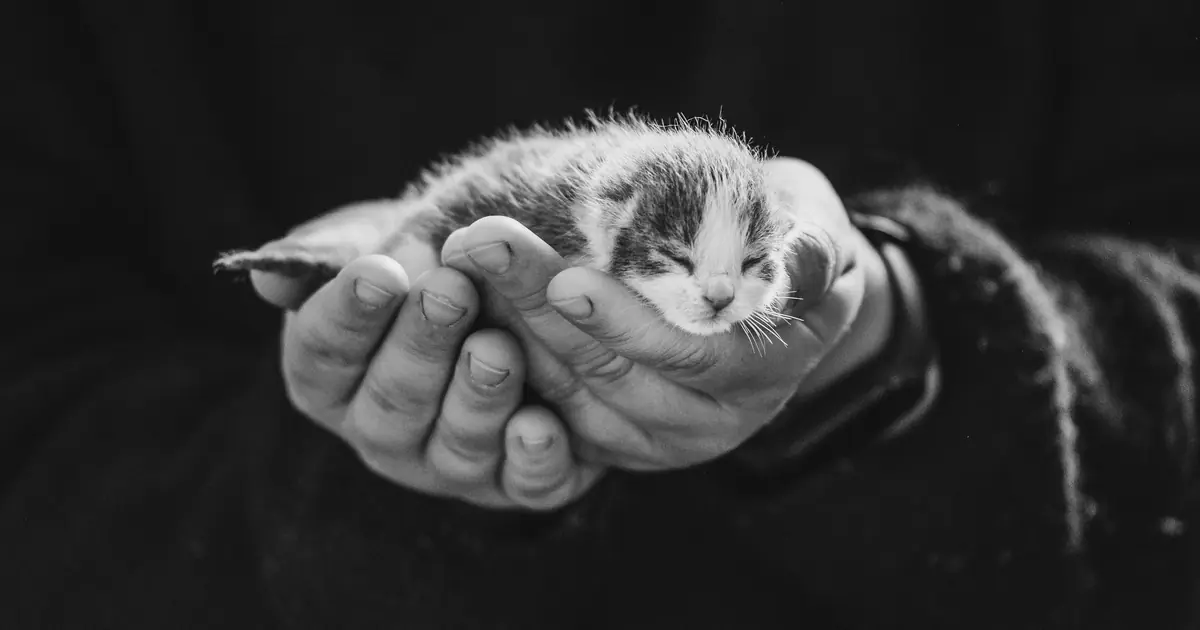
The safest way to touch a newborn kitten is to wash your hands first, move slowly, and keep the whole interaction short and warm. A few simple habits go a long way toward keeping both mom and babies calm.
- Wash your hands with soap and water before and after handling, since newborns have almost no immune defenses of their own yet.
- Watch mom’s body language first. If she’s relaxed, purring, or eating nearby, it’s a fine time. If she’s pacing, growling softly, or hovering anxiously, wait.
- Support the whole kitten in one warm palm rather than dangling it or letting the head flop.
- Keep sessions to a minute or two, especially in week one, then return the kitten to the nest right where you found it.
- Avoid removing kittens from the nest area entirely. Handle them where they are instead of carrying them to another room.
- Keep the room warm, ideally around 85°F for the first week, since a chilled kitten struggles to nurse and recover.
What Is the Kitten Socialization Window, and Why Does Handling Matter Later?
The socialization window is the stretch of early kittenhood, roughly 2 to 7 weeks old, when a kitten’s brain is especially open to learning that people, sounds, and new experiences are safe. Gentle, positive handling during this window has a real, lasting effect on how confident and friendly a cat turns out to be as an adult.
This is where handling actually flips from “limit it” to “lean into it.” Once kittens open their eyes around 7 to 10 days and start moving around more at 3 weeks, short daily handling sessions, a few minutes at a time, help them get used to human touch, voices, and gentle movement. Kittens handled regularly during this window tend to grow into cats that are more relaxed around people and less easily spooked. Miss this window, and even a physically healthy cat may stay noticeably shy or defensive around humans for life.
Kitten Age vs. Handling Guidance
| Kitten Age | Handling Guidance |
|---|---|
| 0 to 2 weeks (newborn) | Brief, gentle checks only, a minute or two once or twice a day. Let mom do almost all the work. Wash hands first and keep kittens in the nest. |
| 2 to 7 weeks (socialization window) | Short, regular handling sessions, several minutes a day, help kittens bond with people and build confidence. Keep it calm and positive. |
| After 7 weeks | Normal handling and play is fine as kittens grow more independent, coordinated, and curious about the world around them. |
When Should You Not Touch a Newborn Kitten, or Call a Vet Instead?
You should hold back on handling, and call a vet instead, any time a kitten feels cold to the touch, refuses to nurse, or cries constantly without settling. Those are signs of real distress, not something a cuddle will fix. A kitten’s gums should look pink, its body should feel warm, and it should nurse actively and sleep in short stretches between feedings.
Also watch the mother. If she seems highly agitated, is growling or hissing at every approach, or is trying to move her litter somewhere new, back off and give her space rather than pushing through with more handling. Constant crying, a limp or unresponsive kitten, or a mother who won’t let any kittens nurse are all reasons to contact a vet promptly rather than waiting it out. These can point to fading kitten syndrome, a serious condition where a newborn kitten declines rapidly and needs urgent veterinary care.
This article is meant to help you understand normal newborn kitten care. It isn’t a substitute for a licensed veterinarian, so if you’re ever unsure whether a kitten or mother needs help, a quick call to your vet is always the right move.
What About Orphaned Newborn Kittens?
Orphaned newborn kittens need far more hands-on care than kittens raised by their mother, since a person has to take over feeding, warmth, and stimulation. Without a mom around, someone has to bottle-feed on a strict schedule, keep the kittens warm with a heating pad or incubator, and gently stimulate them to urinate and defecate after each feeding, something mom would normally handle with grooming.
If you find a litter you believe is orphaned, don’t rush to remove them right away. Mother cats often leave to hunt or use the litter box and come back within a few hours. Watch quietly from a distance first. If it’s been many hours with no mother in sight, or the kittens are clearly cold and distressed, that’s when hands-on intervention and a vet or rescue’s guidance become necessary. Groups like the ASPCA offer solid, practical guidance for anyone caring for orphaned kittens.
Knowing when kittens start drinking water on their own also helps you plan the shift away from bottle or mother’s milk as they grow. And if you’re stepping in as a caregiver, it helps to know whether human breast milk is ever a safe substitute in a pinch (short answer: it isn’t a long-term fix). Once kittens are older and thriving, it’s also worth learning when kittens are actually ready to leave their mother, since rushing that step undoes a lot of the good early socialization work.
Frequently Asked Questions About Touching Newborn Kittens
Q: Can you touch newborn kittens without their mom rejecting them?
Yes. A healthy mother cat identifies her kittens by scent, sound, and familiarity built over time, not a single touch from a human. Brief, gentle handling won’t cause her to reject or abandon them.
Q: How soon after birth can you hold a kitten?
You can hold a newborn kitten within the first day or two if needed, for a health check or weigh-in, but keep it brief, under a couple of minutes, and let mom settle back in quickly afterward.
Q: How many times a day should you handle newborn kittens?
Once or twice a day is plenty for the first two weeks. Short, calm handling sessions are enough to monitor health without pulling kittens away from nursing and warmth for too long.
Q: Is it safe for kids to touch newborn kittens?
Yes, with supervision. Kids should wash their hands first, sit down, and be shown how to support a kitten gently with both hands, keeping visits short so the kitten gets back to mom quickly.
Q: Do newborn kittens need to be handled to be socialized?
Not in the first two weeks, but gentle handling becomes valuable starting around 2 weeks old, and especially between 2 and 7 weeks, which is the window when kittens learn that people are safe to be around.
Q: Why do people say not to touch newborn kittens at all?
That advice comes from an outdated myth that mother cats abandon kittens touched by humans, plus valid concern about chilling fragile newborns or stressing a nervous mom. The scent-rejection part isn’t accurate, but the caution around limiting disturbance still makes sense.
Q: When should you stop touching a mother cat’s kittens and back off completely?
Back off if the mother seems highly agitated, growls or hisses repeatedly, or starts trying to move her litter to a new hiding spot. Give her space and quiet, and only check in briefly once she’s settled.
Q: What if a newborn kitten feels cold when you pick it up?
A cold kitten needs warming up carefully and a vet call, not just more handling. Kittens can’t regulate their own body temperature well until around 3 to 4 weeks old, so a cold kitten can decline quickly without help.

Hello and welcome to The Ideal Cat!
We are some passionate cat owners from different professions. We love our cats and have a lot of experience in how to care for our pets. We are incredibly excited to share our knowledge, experience, and research with you. So you can take good care of your loving cat. We will answer most of the common questions about owning cats, taking care of them, etc. If you have any question contact with us. Thanks for visiting! Enjoy the content.
