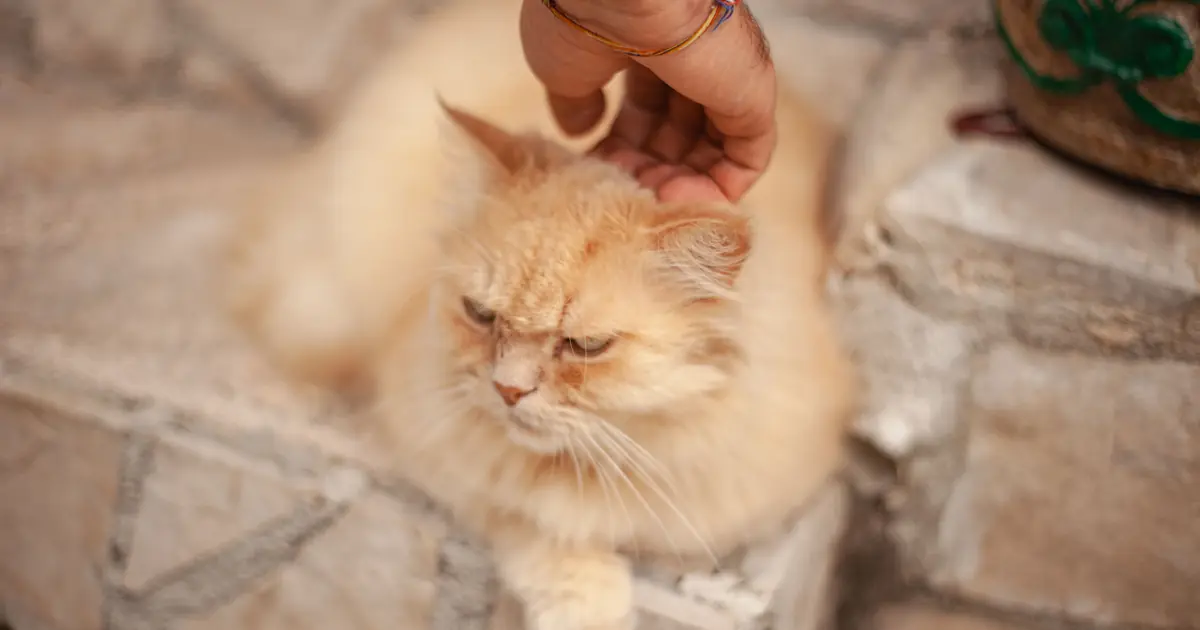
You reach out to pet your cat, and it either melts into your hand or turns into a biting, kicking little alligator. The difference often comes down to one thing: where you’re petting.
Here’s the map of feline sweet spots (and the no-go zones) so you get purrs, not scratches.
- Cats most enjoy petting around the head: cheeks, chin, under the ears, and the top of the head.
- These spots hold scent glands, so petting there feels good and helps a cat mark you as familiar.
- Many cats also like gentle strokes along the neck and down the back to the base of the tail.
- Most cats dislike belly, tail, and paw touching, and can react by grabbing or biting.
- Watch body language and stop before overstimulation, purring and leaning in mean keep going.
Where does a cat like to be petted?
Cats most like being petted around the head, especially the cheeks, chin, the base of the ears, and the top of the head. These areas are packed with scent glands, so petting there is both pleasant and meaningful, your cat rubs its scent onto you and marks you as safe and familiar. Many cats also enjoy strokes along the neck and back. The head is almost always the safest, most welcome place to start.
Why do cats like head and cheek petting?
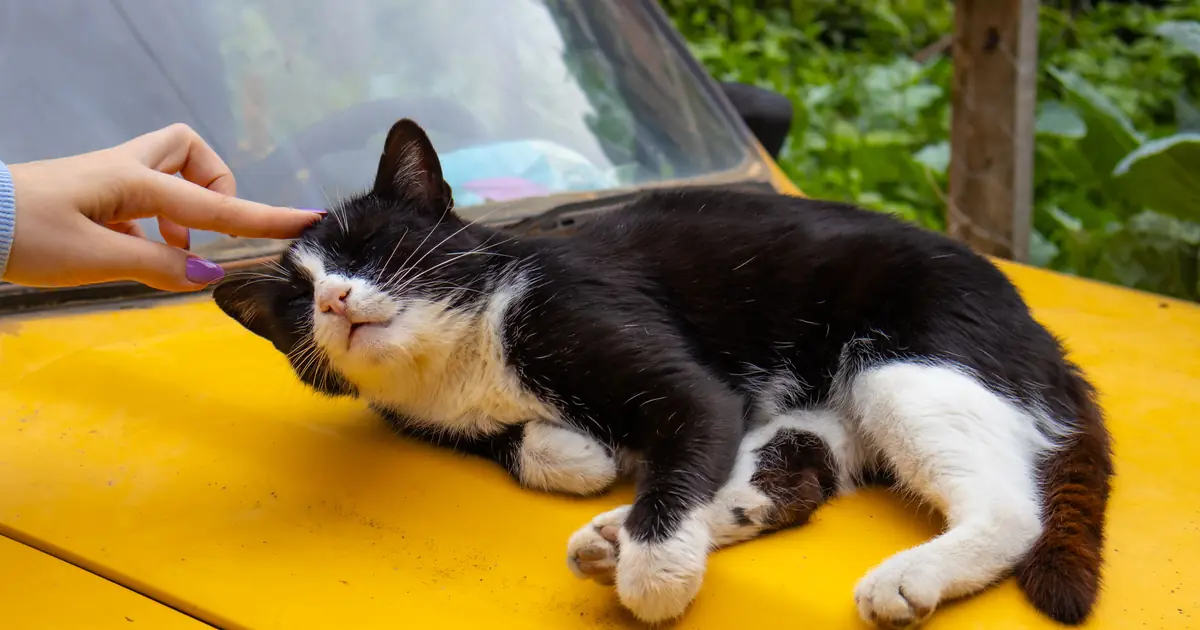
Cats love head and cheek petting because those spots carry scent glands used for bonding. When you scratch a cat’s cheeks or the base of its ears, you’re touching the same glands it uses to rub against furniture and your legs. That scent-marking is how cats claim their people and territory, so head petting feels natural and reassuring. It’s the same instinct behind why cats headbutt you and why so many close their eyes when you pet them.
Where should you not pet a cat?
Most cats dislike being touched on the belly, tail, and paws. The belly is a vulnerable area cats instinctively protect, so even a trusting cat that rolls over may grab your hand if you rub it, a point we cover in do cats like belly rubs. Tails and paws are sensitive too, and many cats find handling there unpleasant. There are exceptions, but when in doubt, keep your hands to the head and back.
What are the best and worst petting spots?
Here’s a quick guide to feline yes-zones and no-zones.
| Spot | Most cats’ reaction |
|---|---|
| Cheeks and chin | Love it, scent-gland sweet spot |
| Base of the ears / top of head | Usually enjoy it |
| Neck and down the back | Often welcome, gentle strokes |
| Base of the tail | Some love it, some overstimulate |
| Belly | Usually dislike, may grab or bite |
| Tail and paws | Usually dislike being handled |
How can you tell if your cat likes the petting?
Read your cat’s body language to know if it’s enjoying the attention. Signs of a happy cat include purring, leaning into your hand, slow blinks, a relaxed body, and a raised rear when you scratch near the tail. Warning signs to stop include a twitching or thumping tail, flattened ears, skin rippling, tensing, or turning toward your hand. Stop before your cat reaches that tipping point, which is the essence of good petting, and see why cats like being pet for more.
Do all cats like the same spots?
No, petting preferences vary by individual cat, so let yours guide you. Personality, past handling, and mood all shape what a cat enjoys, some adore long back strokes, others only want a quick cheek rub. Newly adopted or shy cats often prefer minimal touch until they trust you. This article is educational; for more on feline body language and gentle handling, the ASPCA and International Cat Care are trusted resources.
Frequently Asked Questions
Q: Where is a cat’s favorite place to be petted?
Most cats’ favorite spots are the cheeks, chin, base of the ears, and top of the head, where their scent glands are. Gentle strokes down the neck and back are often welcome too. The head is the safest place to start.
Q: Why does my cat bite when I pet its belly?
The belly is a vulnerable area cats instinctively protect, so touching it often triggers a grab-and-bite reflex, even in trusting cats. A belly-up pose usually shows trust, not a request for a rub. Stick to the head and back.
Q: How do I know if my cat likes being petted?
Look for purring, leaning into your hand, slow blinks, and a relaxed body. Stop if you see a twitching tail, flattened ears, rippling skin, or tensing, those mean your cat has had enough and may swat or bite.
Q: Do cats like being petted on the back?
Many cats enjoy gentle strokes along the neck and down the back. Some also like a scratch at the base of the tail, though it overstimulates others. Watch your cat’s reaction and stop if the tail starts twitching.
Q: Why doesn’t my cat like being petted much?
Some cats simply prefer less handling due to personality, past experiences, or being shy or newly adopted. Respect that, and focus on short head scratches on the cat’s terms. Trust and tolerance for petting often grow over time.
Q: Is it okay to pet a cat’s paws?
Most cats dislike having their paws handled, as they’re sensitive and used for defense. A few tolerate it, but for most cats it’s a no-go zone. Keep petting to the head, cheeks, and back for the best response.

Hello and welcome to The Ideal Cat!
We are some passionate cat owners from different professions. We love our cats and have a lot of experience in how to care for our pets. We are incredibly excited to share our knowledge, experience, and research with you. So you can take good care of your loving cat. We will answer most of the common questions about owning cats, taking care of them, etc. If you have any question contact with us. Thanks for visiting! Enjoy the content.
